Sunday, 22 October 2023

Levelling down

Well ‘flattening out’ really – but read on to find out what and where.

Thursday 5th October

In contrast to last week, today we underachieved on the planned job list. Partly because of reduced manpower (only 5 team members attending) and partly because of the added complexity of raising some of the up side cess chambers at Stanton.

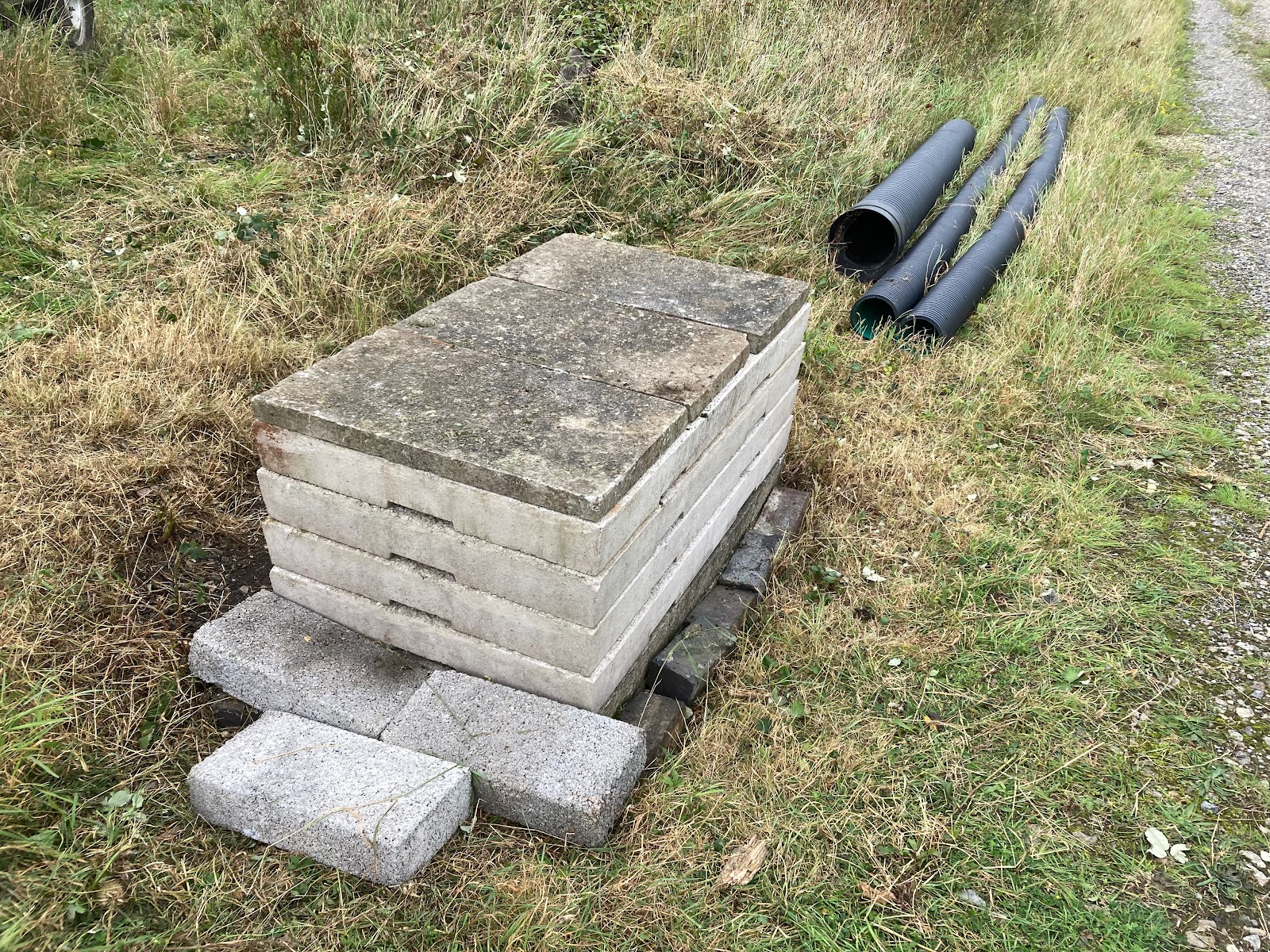
For the up side cess chambers at Stanton we took 7 concrete catch pit rings to raise two chambers by one ring each, one by 2 rings and one by 2 rings but also replacing a damaged existing ring. Lids of two chambers were found to be damaged - so a return to Winchcombe to collect replacement blue mesh covers was made.
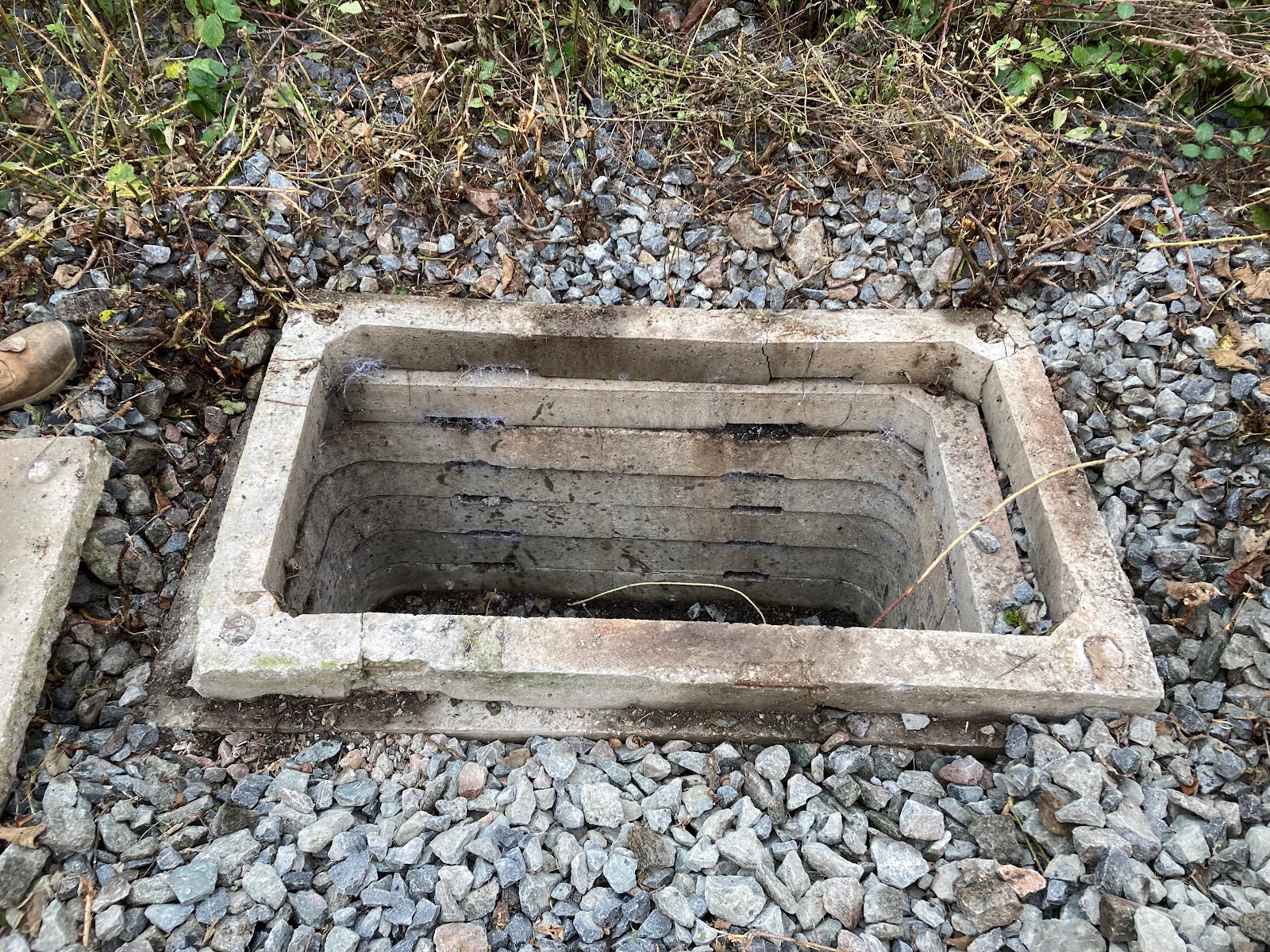
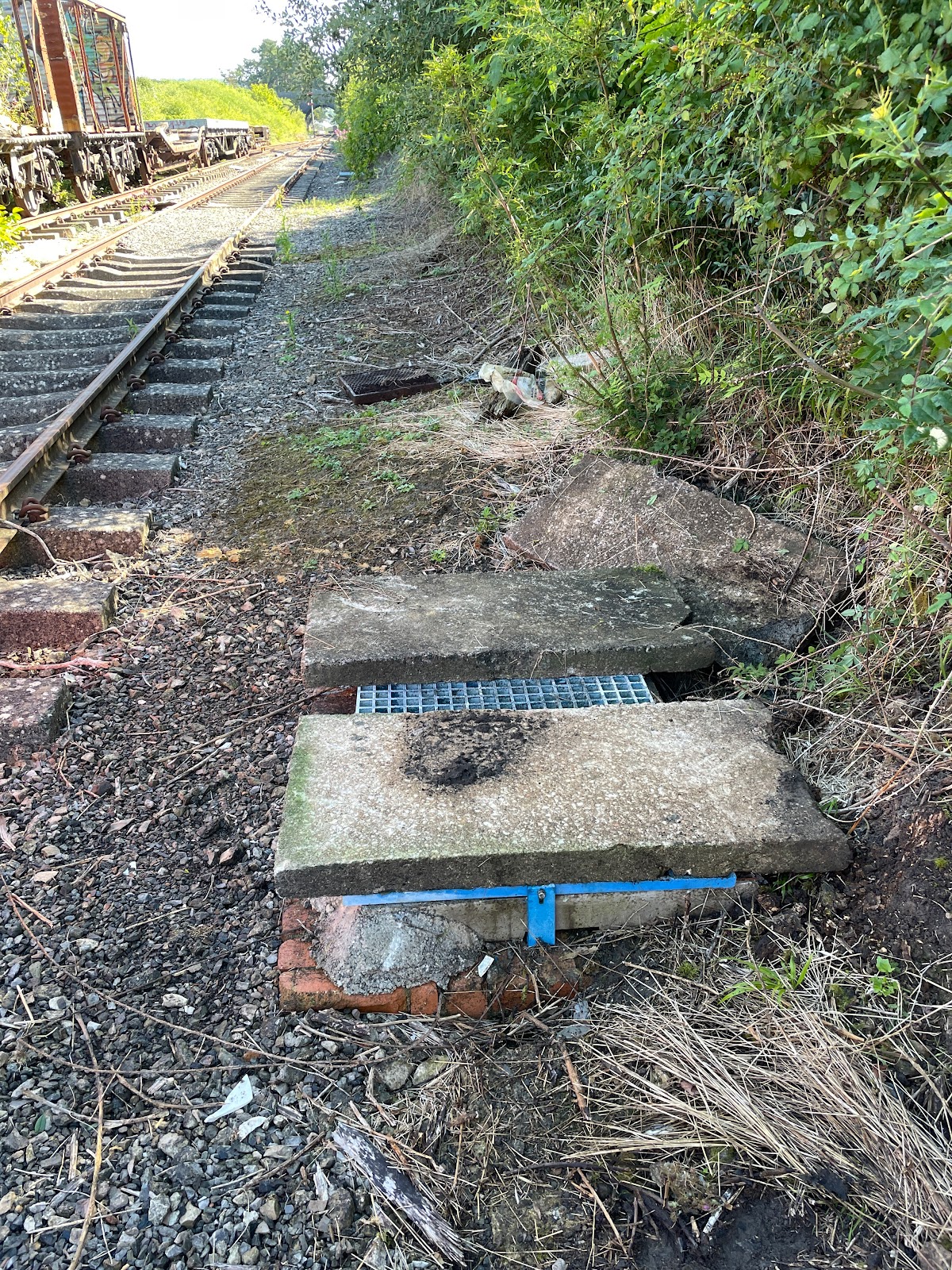
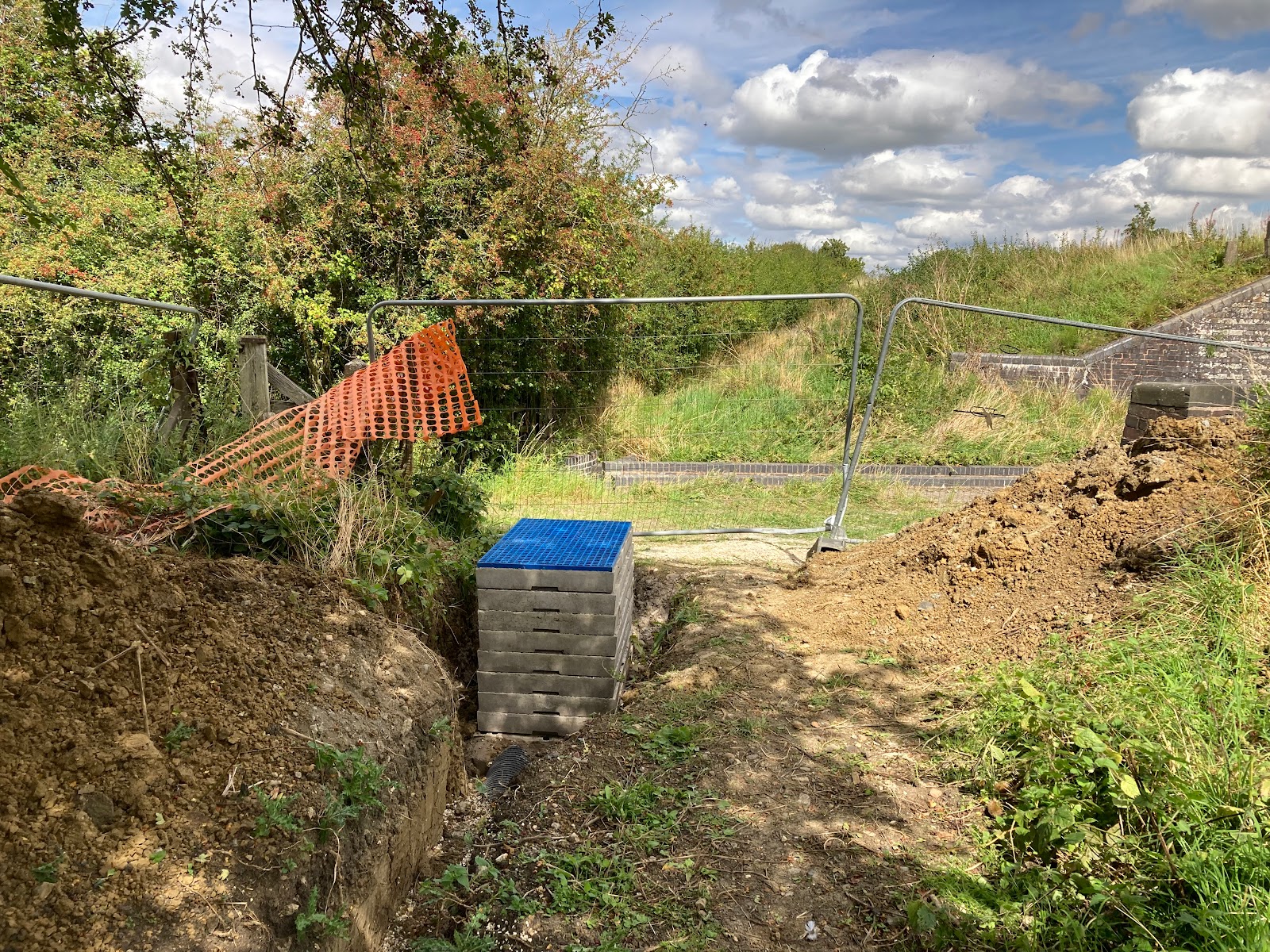
Raising the height of the cess chambers along side the vacant trackbed (up side at Stanton) reduces the chance of damage by vehicles. The top ring here has been displaced and damaged, so we replaced it and added two more on top.

Also we collected three more concrete rings. These will be used later to raise the height of the berried chamber near mile post 8½. Currently this has a steel plate lid which was buried by 2 to 3 inches of ballast.

Another find was the steel road strength manhole covers of the cess chamber at the foot of the incline from Stanton Yard by the abutment of bridge 10. These were lifted and the inside inspected, all fine inside.

Inside cess chamber under bridge 10 at Stanton.

As safe manual lifting and positioning of the concrete rings takes 4 persons, culvert clearance and inspections plus cess and crest chamber vegetation clearance did not commence until after lunch. Hence only the stretch from Stanton bridge 10 to Culvert 7A was completed. The only visual inspection undertaken was that of culvert 7A, the syphon on the low mileage side of the main road bridge at Stanton.

The main issue at culvert 7A is that the exit ditch across our neighbours land is choked. This leads to standing water in the outlet chamber.
 

Additionally Jonathan, our chief plant operator, used the flail to clear vegetation from the vacant up side track bed between Gallery Farm crossing and Stanton Yard; the turning point near bridge 11 and at Stanton Yard including the entrance.

We made a quick check on the condition of Stanton aqueduct. No water was flowing through the aqueduct. The crack on the down side inlet channel appears to be slightly larger than on our previous visit. The upside outlet all looks reasonable. Possibly could be that the downside embankment has dried out a little during the summer but, that is speculation.

Finally we took at look at bridge 7 where some remedial work on the roadway on the up side has taken place. We considered taking on some of the outstanding brickwork repairs, but the more we looked the more we found! Hence we have suggested to the Bridges team that this would be best undertaken by a contractor with erection of scaffolding.

Recent work on bridge 7 includes new fences and retaining boards.

Thursday 12th October

Seven of the team attending on what was noticeably a cool autumn day, but thankfully dry.

Nigel and Dave made a quick visit to Prescott Road bridge to trim vegetation on the outlet of culvert 31B by the road side. This is to enable delivery of some top soil to finally complete the work on the roadside outlet ditch/pipe.

First job for Ian, Roger, Stuart and Andrew was placing three concrete rings on the up side cess chamber by milepost 8¼ at Stanton. This was the one previously buried under the ballast.

Up side cess chamber now one ring above ground level rather than two below.

Jonathan was on the flail all day - clearing the side of the vacant track bed all the way from Stanton bridge 8 to just north of Laverton foot crossing by milepost 7¼. This included cutting three wider spots between bridge 7 and Laverton foot crossing where it is now safe to park a vehicle. Also cut was the footpaths at Laverton foot crossing.
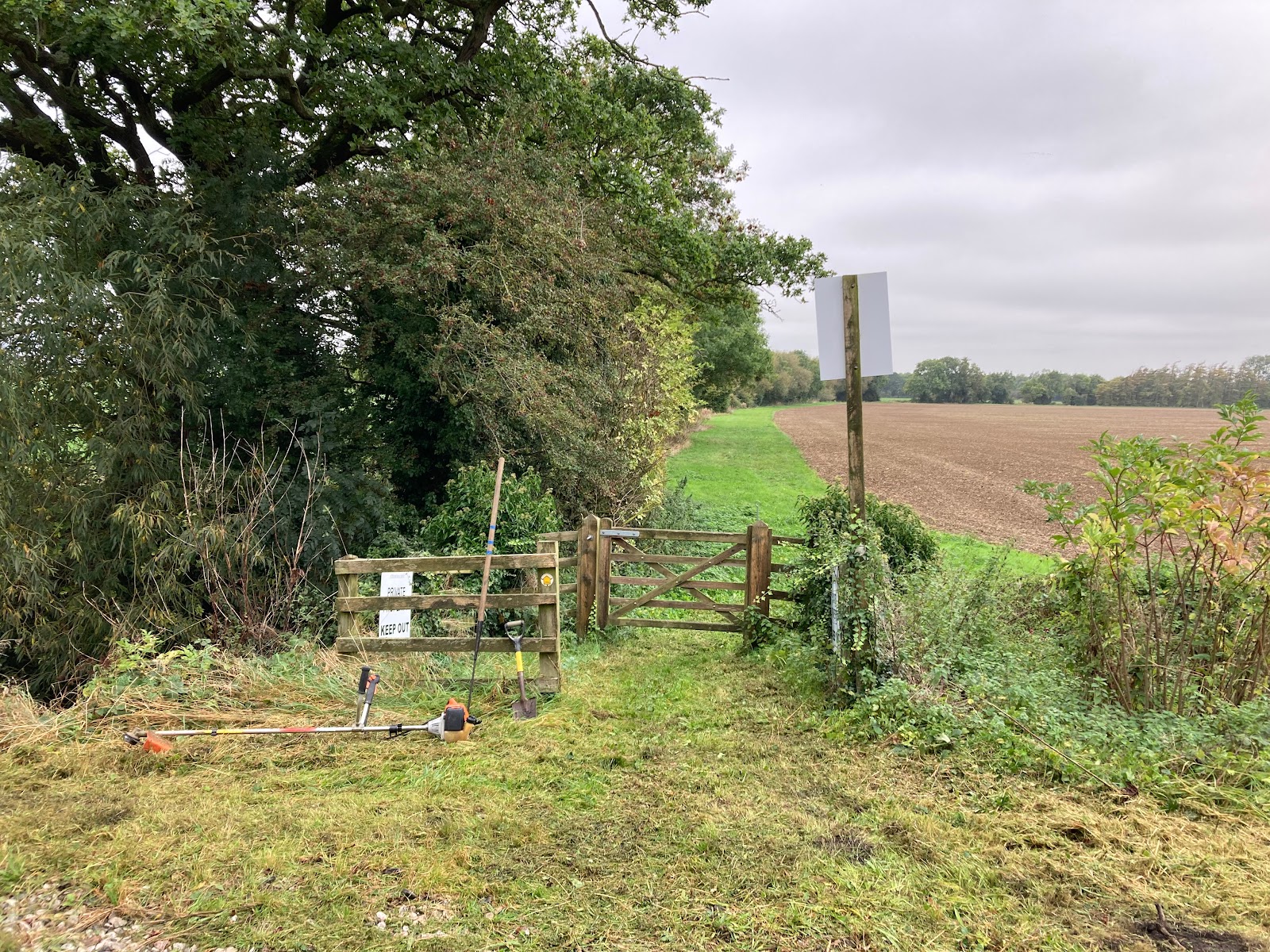
Laverton foot crossing looking a lot neater after flailing - and safer too.

The rest of the team then undertook visual inspections and clearance of culverts 6C, 6B and 6A; plus clearance around the gate at bridge 6 Laverton Meadow Lane and Laverton foot crossing; plus all the cess chambers on both sides between bridge 7 and bridge 6.

Depth and flow of water this autumn has meant we have not been able to take too many pictures of the insides of culverts. Here is one we did manage - 6B.

Also undertaken was some further investigations of the cess drain flows between bridges 8 and 7. This suggests that some of the flow from the inlet of culvert 7A is getting into the down side cess rather than flowing out on the up side as the ditch in the adjoining property is blocked.

Finally Ian and Jonathan under took a safety review of the handrails over the Isbourne up side at Winchcombe. Just a few loose screws required tightening with an allen key.

Monday 16th October

Yes, a report for a Monday! Only Jonathan working (at our usual overtime rates!) to supervise the delivery of top soil to Prescott Road and Winchcombe Yard. Ken Pink plant hire had very kindly donated this, plus the delivery in a lorry fitted with a grab. It was worth waiting for, very fine soil with almost no debris. Two grab-fulls were unloaded at Prescott Road to infill the roadside verge behind the sandbag headwall constructed earlier this year. The rest of the load was delivered to the up yard at Winchcombe for use as top covering around the Usk hut and the recently raised main drain manhole. (See the blog post “A busyweek” on the Heritage Herald blog.)

Lorry mounted grab makes quick work of delivery of the top soil at Prescott Road. [Photo by Jonathan]

Thursday 19th October

Six members of the team managed to accomplish the planned tasks for the day between the early morning and mid afternoon rains of storm Babet.

Firs thing, Ian and Martin, nipped down to Prescott Road bridge (32) to complete the levelling out (perhaps that is a better description than ‘levelling down’) of the top soil on top of the culvert 31B outlet in the roadside ditch. They also measured up for this missing sections of fence - all that now remains of the work on the 31B outlet, outside of our boundary line.

Nigel, Dave and Andrew headed to Little Buckland to start culvert/cross drain clearance and inspection. A disappointment was that one of our recently serviced heavy duty brushcutters failed to start.

Jonathan undertook some running repairs on the flail, the throttle cable and the starting rope coil had come loose during clearance work the previous Saturday. He then used it to clear the access track from the road at bridge 5. Then the whole length of the vacant down side track bed to culvert 3A at Peasbrook was cut at least one flail width. In some places the cut was wider, including the old farm gate south of bridge 4 where it is possible to just turn a short wheelbase vehicle.

Cleared access at Little Buckland Bridge (5). Needs a few more cuts to get to bowling green condition!

Ian, and Martin joined the group at Little Buckland and Peasbrook on the inspections and clearances of cross drain 3A and culverts 3B and 4A. The good news is that there is no significant deterioration in their condition since last year. However, one change from last year was the depth and flow of water. Indicative of a damp summer and a few recent days of heavy rain.

Inlet of culvert 4A where the main flow was from the low mileage (north) end toe drain.

This made it unsafe for some of the clearance of vegetation on the steep banks, we will have to return in a drier spell. Also not so good new was the continuing badger activity at Little Buckland. The cheeky animals had even made a bed chamber in one of the down side toe ditch chambers.
One bedroom detached property suitable for badgers. [Photo by Dave]

Most wildlife makes a hasty exit as soon as we try to photograph them. However, this young common toad at Little Buckland was an exception. 


Friday 20th October storm Babet aftermath

Here is justification of the spending on maintenance and improvement of our drains and culverts. This is the storm overflow brook which runs behind Churchward House and then the down side of Winchcombe Yard. Without this, all the water running off Langley Hill to the west of Winchcombe would be running through the platforms at Winchcombe station.

[Photo by Infrastructure Manager, Ian]


Saturday, 30 September 2023

The advantages of modern technology

During the summer at Stanton we have constructed five new chambers using traditional concrete catch pit rings. These are heavy, each requires at least three and preferably four people to lift when placing onto the chamber stack. The 11B to 11A up side diversion used three dozen, so a lot of work shifting and placing them. Admittedly, for two of the chambers we were able to use the telehandler to assist with the placement. At the Rail Live show in early summer, we spotted catchment rings made from GRP, so much lighter. So light that one person can comfortably lift a standard size ring. Increasing the height of a deep manhole near the Usk Hut in the up side yard at Winchcombe was the ideal opportunity to try these out. This was a great success; the lightness of the rings made for both a quicker and a safer installation. The only drawback is that each ring costs over twice that of comparable concrete ones.

Thursday 7th September

Six hardy folk attending on what will almost certainly turn out to be our hottest working day this year.

Nigel, Dave and Martin were extra hot heroes as they use the two working heavy duty brushcutters to clear the vegetation around Bridge 17A and Culvert 17B. These are the two big culverts south of Hayles Abbey Halt. This was the first clearance following the end of the bird nesting season. These two culverts we done first to that they were ready for visual inspections by the bridge team.

Inside culvert 17B - bone dry after a week of hot dry weather. [Photo by Martin]

Jonathan, Polly and Andrew shifted 1.5 tonnes of mixed stone and rubble to back fill around the exit chamber on the up side 11B to 11A diversion at Stanton. Then collected 1.5 tonnes of pea gravel from Elliots which was barrowed into the trench between the second and third intermediate chambers. This completed the packing of the pipe with pea gravel. Parts of culvert 11A were cleared of weed as the water level was well down.

Finally all the pipe on the 11B to 11A diversion is covered with pea gravel. Just needs the trench infilled and all our good work disappears from sight!


Special thanks to Elliot’s for donating two more long handle American style shovels - these really make shifting loose material so much easier. (Not new technology as such – but technology from the New World. You have to admit that the Americans do have some good ideas!)

Thursday 14th September

A much reduced group of only 4 in today. Hence only a limited amount of jobs completed, and not helped by the wet weather.

First task was to move the latest delivery of cement into the store shed – even in plastic bags cement can get damp and then become a solid lump.

The main task was the clearance of culverts 24A and 24B at Working Lane, Gretton. However, first thing was to clear the haul road gateway at Working Lane, and then a turning point for vehicles at the top of the haul road opposite the Royal Oak pub.

Down side crest chamber of culvert 24A after clearing. Garden of Royal Oak in the background. [Photo by Roger]

All the cess chambers between Greet Tunnel and Royal Oak were cleared, plus both sides of 24A and the up side of 24B. Rain and exhaustion then stopped further work!

Thursday 21st September

Only three intrepid members of the team in attendance, all of them had been absent last week.

First was a visit to Royal Oak (Working Lane) to undertake he internal visual survey of culvert 24A. This has an extension to the bore on the up (exit) side which uses a deteriorating steel plate as the roof. The are more laminations visible in this than at last year's inspection. Hence it does need rebuilding - which has to be a contractor job and when no trains are running as this is under the vacant up track bed so close to the running line. We will need to schedule this rebuild for one of the winter shutdown periods in the next couple of years.

The up side extension of culvert 24A with the rusting steel roof. We are not sure when this was built, possibly at the same time as BR(W) work at Winchcombe in the 1950s.

Then up to Stanton to check how the water is flowing in the new 11B to 11A upside exit diversion. Surprisingly only a trickle exiting into 11A even after a couple of wet days. The sumps in the intermediate chambers are filling up.

Finally the main task of the day; installing the recently arrived GRP rings (Cubis STAKKAbox) on the deep manhole near the Usk building in Winchcombe up yard. The ring installation took less than half an hour - each ring is light enough to be lifted safely by one person. We secured the lowest ring in position with mortar. The subsequent ones stack snugly, just like big Lego blocks. The rest of the morning and early afternoon were spent backfilling around the new rings using the mix of soil and rubble from by the boundary fence of the yard. All done under the watchful eyes of the Heritage Usk team, they were as pleased as us at the huge visual improvement, including removal of most the heras fence panels. We fitted blue mesh covers temporarily as the proper lockable lids from Cubis will be delivered next week.

The four GRP catch pit rings have raised the height of the 'Usk manhole' by 600mm.


Careful positioning by Jonathan of the telehandler gets the back fill spoil around the chamber.

 
Backfill complete, temporary blue mesh cover. But what a visual transformation!

The common lizards of Winchcombe appear easier to photograph than their cousins at Stanton.


More pictures of the work by the Usk Hut are in the Lamp tops for Broadway post on the Heritage Herald blog.

Thursday 28th September

A very productive day, the seven team members attending completed all the planned items and then found time for a couple of extra tasks at Winchcombe.

All the planned work was a Stanton - but for a change this did not involve the 11B to 11A up side diversion.

Foremarke Hall heads the first up passenger train of the day at Gallery Farm crossing.

Internal visual inspections and culvert clearance was carried out on culverts 11C and 11A and cross drain 11B. Down side slip markers at 11C were checked - no obvious sign of recent movement.

Down side inlet of culvert 11C is this plastic extension added sometime ago during embankment improvement. It needs a proper headwall - but that is not our most urgent job.

Between bridges 10 and 11 vegetation clearance around the up side cess chambers and down side cutting crest chambers took place.

Most of the up side cess chambers between bridges 10 and 11 were raised using the spare concrete catch pit rings left over from the 11B diversion. (Yet more moving and positioning of concrete rings!). The chamber adjacent to the bridge 11 vehicle parking and turning point received 4 rings - this is now very visible when turning a vehicle.

Raised up side cess chamber near bridge 11.


Most of the surplus pipes and other materials from the 11B up side diversion were recovered back to Winchcombe yard.

The extra tasks at Winchcombe were (1) tightening the fixings on the handrails on the down side wing walls of the River Isbourne bridge and (2) installing the lockable 3 section lid on the deep manhole by the Usk hut in the down side yard. This lid had been delivered by Cubis earlier in the day. That completes our work on that manhole, final addition of top soil and grass seeding is over to the Heritage build team.

The lockable lids neatly complete the 'Usk hut' manhole.

Monday, 4 September 2023

All joined up

Finally we have laid the last section of pipe for the up side outlet diversion of culvert 11B at Stanton. So water is now flowing down the new pipe and then into the outlet of 11A by bridge 11. Or it would be, the drier weather towards the end of August has meant very little flow through the bore under the track of 11B.

Thursday 10th August

Eight of the team attending on what is likely to be one of the hottest days this summer.

Roger and Ian first headed to Cheltenham Racecourse to rectify the latest vandalism on the sidings at Hunting Buttings tunnel. This was to replace a GRP blue mesh cess pit lid where one of the retaining brackets had been smashed. Also to remove the lid and other debris which has been deposited in the chamber. This was on the down side near the siding points. As the retaining clips are obviously not strong enough to withstand these attacks; we are planning to order some grated anti-vandal galvanised steel lids with steel brackets to replace any future damage.

Repaired blue mesh cover at Hunting Butts. [Photo by Ian]
On the way back from Cheltenham, they called in at Elliot's Bishops Cleeve to collect the first tonne of pea gravel from the second PO. Then to Stanton to join the rest of the team.

Meanwhile, our plant operative, Jonathan had taken the telehandler to Stanton. This was to move two 9 ring stacks of catch pit frames from the store by bridge 11 to nearer the third intermediate and the final exit chambers in the new 11B to 11A up side diversion trench.

The exit chamber with a very neat job for the outflow pipe.
Master bricklayer, Polly, got to work on the brick and block courses of the exit chamber. This included fitting a short length of pipe to the existing exit pipe under the farm track - carefully cut to an angle as the chamber is at an angle because the new trench wiggles to avoid tree roots. The completed pipe exit is very neat - great pity that this will not be visible once the chamber is completed.

Nigel was chief mortar and concrete mixer and block cutter. Martin and Andrew adjusted the level of the trench for the next two sections of pipe; and laboriously widened the trench at the points where the pipe collars will go. This length of trench was dug with a narrower digger bucket - but it has the advantage that less pea gravel packing is needed. The Stanton clay is extremely hard - best way to cut out was with lump hammers, crowbars and bolsters. Initially Dave had the important job of manning the 110v pump to drain the third intermediate chamber and the trench beyond it.

Martin demonstrates the method of widening the trench at the pipe joins.
On arrival, Roger and Ian assisted Dave and Nigel with mixing and pouring the concrete for the back fill of the third intermediate chamber. This took a large amount of aggregate and six bags of cement. This chamber is now ready for fitting of the concrete rings.
Third intermediate chamber backfilled and ready for fitting of the catch pit rings.

Unfortunately time defeated us to get more lengths of pipe installed - so the delivered pea gravel was unloaded onto the slop board at track level. Finally the three concrete rings for the entry chamber were extracted from the now long grass and positioned at the top of the embankment by the existing 11B outlet. An attempt to use the telehandler to move these was abandoned as the telehander would not climb the slope up from the field on Gallery Farm crossing.

Wildlife report (all from Stanton)
Insects - to add the abundance of butterflies we noted quite a few damselflies.
Birds - not previously noted are wood pigeons.  Also circling above was a flock of gulls.

Thursday 17th August

Again the score on the door was 8 (number of team members attending). However our plant operative, Jonathan, was on loan to the clearance team for excavation work at Chicken Curve.

The remaining magnificent seven (Dave, Nigel, Ian, Stu, Roger, Martin, and Andrew), achieved a major milestone on the 11B to 11A up side diversion at Stanton. Five pipe lengths were laid on the exit end (low mileage) into the exit chamber. The exit chamber was backfilled with concrete and the inlet pipe to it bricked. Then attention turned to the entrance (1200m away), where the last part of the bund was excavated; the final length of pipe laid, bricked into the chamber and the old ditch to the land drain in the adjoining field blocked. So all water coming through the 11B bore now flows along the diversion to enter the 11A exit by the farm track. The storms over the coming weekend should provide the water for this.

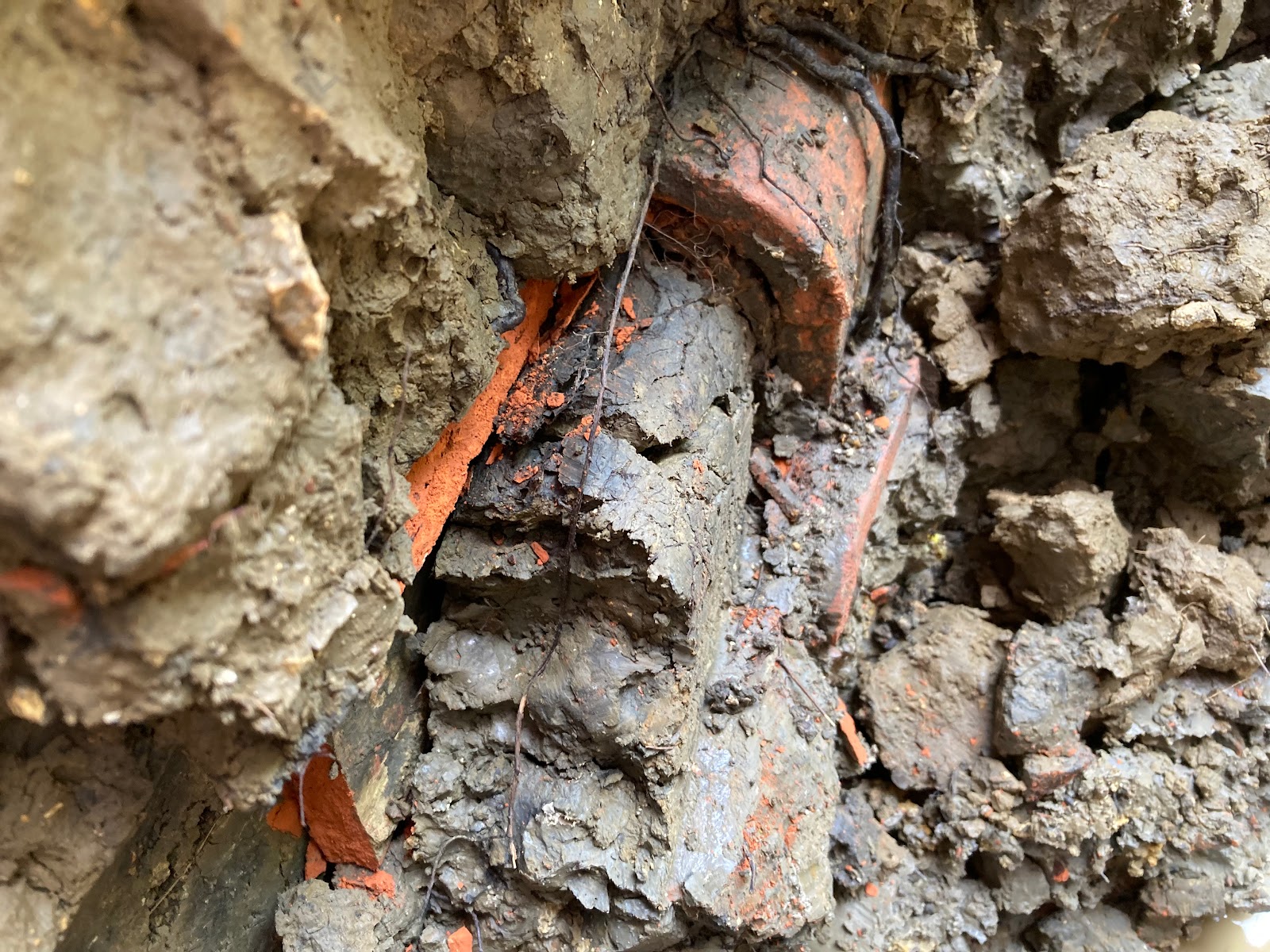
Remains of a pre-railway land drain, so over 120 years old. Not surprisingly filled with clay.
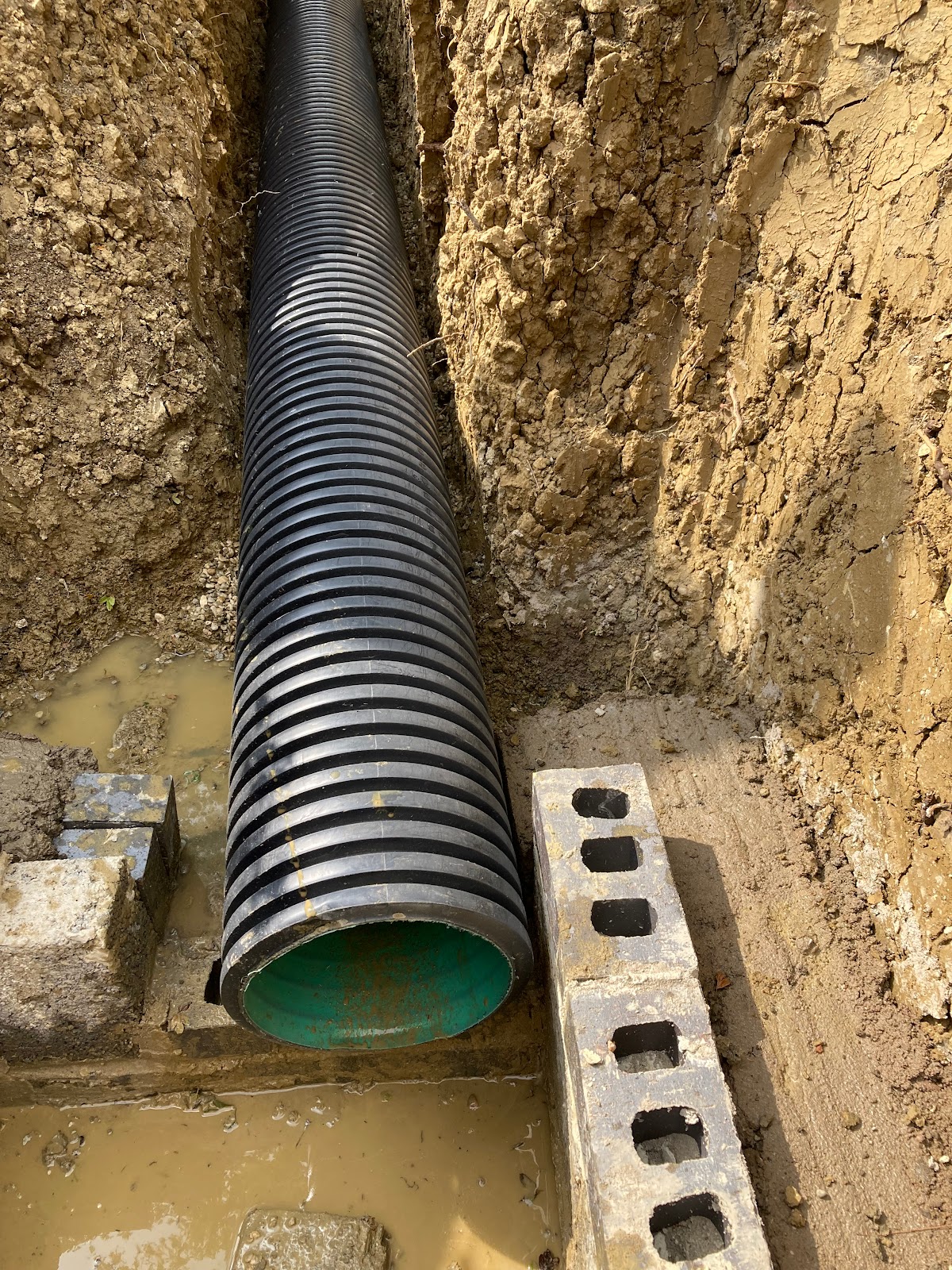
The last section of pipe in the final section of the trench - inlet to the outlet chamber.


And the very last section of pipe to be laid - the one at the top of the trench, the outlflow from the inlet chamber.

And this is the inlet chamber, the entry at the top is the original under track bore of 11B.

As it was at Teddy Bear Thursday, Bev the Bear (our team mascot) came along to view progress at Stanton. However, he was issued with a Safety warning for not wearing a hi-vis whilst lineside!


Thursday 24th August

Attendance down to six today, but hey it is summer holiday time and even volunteers are entitled to time off. (With pay at the same rate, too, zero!).

First was an urgent request to assist with recovery of a road vehicle belonging to the company undertaking bridge inspections. This was stuck fouling the running line near Gotherington. Thunderbirds 1 and 2 attended with Scott, Virgil and Tracy. They successfully cleared the vehicle. Only a ten minute or so delay to the first trains.

Then back to the planned items. One of the transits continued from Gotherington to collect another tonne of pea gravel from Elliot's at Bishops Cleeve. This was taken to Stanton to complete the pipe surround on the new pipe at the entry at culvert 11B.

The three members who hadn't gone to Gotherington completed the additional concrete back fill on the exit chamber of the 11B to 11A up side diversion.

Then with the arrival of the other three members, plus the telehandler; the concrete rings for the entry and exit chambers were lifted into position. Plus the final bricking around the exit pipe on the entry chamber was completed.

The team (l to r, Nigel, Dave, Martin, Polly, Jonathan) admire the completed inlet chamber. In the end this received four concrete rings - we had one spare from the first intermediate chamber; it was almost obscured by the summer vegetation growth.
Using the telehandler to place the concrete rings on the exit chamber.

The completed exit chamber.
The last stack of rings to go in, Foremarke Hall passes over bridge 11 bound for Broadway.

Wildlife report
Several more common lizards spotted at Stanton (near Gallery Farm crossing); obviously the embankment is ideal environment for them.
Lots of butterflies -various species which we didn't have time to identify
Fruit ripening - blackberries, sloes and a few pears dropping of the trees

Thursday 31st August

Seven of the team working on the last day of (metrological) Summer. The weather forecast was far from summer though.

The main task was to place 10 concrete rings on the third intermediate chamber of the 11B to 11A up side diversion at Stanton. Using the telehandler and a a block & tackle borrowed from S&T this was accomplished safely and with ease in under two hours. The fourth tonne of pea gravel on the latest PO from Elliots was collected and placed around the diversion pipe between the first and second intermediate chambers. The final two tonnes on this purchase order will complete the pipe surround to the exit chamber.

Not a monster from the deep; but the telehandler with block and tackle attached lowers one of the catch pit concrete rings over the hedge. [Photo by Dave]

 
Final adjustment on ring position.
The completed third intermediate chamber - all 10 concrete rings.

Water was dribbling out the outlet of the diversion; but not enough rain yet for flow from the original bore to enter at the inlet.

All that is left to do now on the up side at Stanton is to infill the trench - all 1200m of it. Then later this year we will start on the down side.
Andrew and Roger went to Little Buckland bridge 5 to meet the prospective purchaser of Archer Farm (down side of line). We showed him culvert 5B which has a inlet from ponds on the farm. This was bone dry. We also showed him the toe ditch from culvert 5A by bridge 5 all the way to the foot crossing by the southern most boundary to the farm. This was dry - with just a trace of dampness in places. However the embankment and boundary hedge here are very overgrown; they will need clearing and the toe ditch tidied up.
Evidence of toe ditch just discernable on the down side at Little Buckland.
 

With the potential for a very wet afternoon (which actually did not happen!) we took the opportunity to undertake a visual inspection of the northern part of the line by riding the train to Broadway and back to Winchcombe.


Tuesday, 8 August 2023

Digging complete

A major milestone is the completion of the digging of the trench for the 11B to 11A up side diversion at Stanton. We started this on 2nd March – 5 months ago; making it one of our longest running projects.

Thursday 13th July

Seven team members working, fortunately only interrupted by a heavy shower of rain for a couple of minutes. On that count, for Summer 2023 it was a dry day!

We made some more progress on the up side diversion of the exit of culvert 11B at Stanton. At the high mileage end the chamber at the current exit of the bore was built up to ring height. Also we back filled it with concrete, just leaving a hole to insert the first length of pipe of the new run. This will be the last item to do - as when we do that water will run down the new pipe. The gap in the trench for this was reduced in height and length - heavy manual digging in the clay soil.

The new entry chamber; gap left to insert the first length of pipe. Three concrete rings required for completion.

At the other end of the ditch our mindigger excavated the pit for the third and final intermediate chamber and began the trench down to the 11A exit. It was pleasing to be working on the final length of trench - the end is in sight! The minidigger was returned to Winchcombe Yard so that it can be used next week on the children's play area by platform 2. In return we will have a contractor with a larger machine at Stanton - this should cope better with the heavy clay.

Almost lost in the long grass - our minidigger works on the site of the third intermediate chamber.


Finally we checked the level of the trench between the second and third intermediate chambers; adjusted as necessary and laid two more lengths of pipe.

Wildlife report – with a focus insects

We spotted quite a few - the following were identified:
Tortoiseshell butterfly
Large yellow underwing moth (Noctua pronuba)
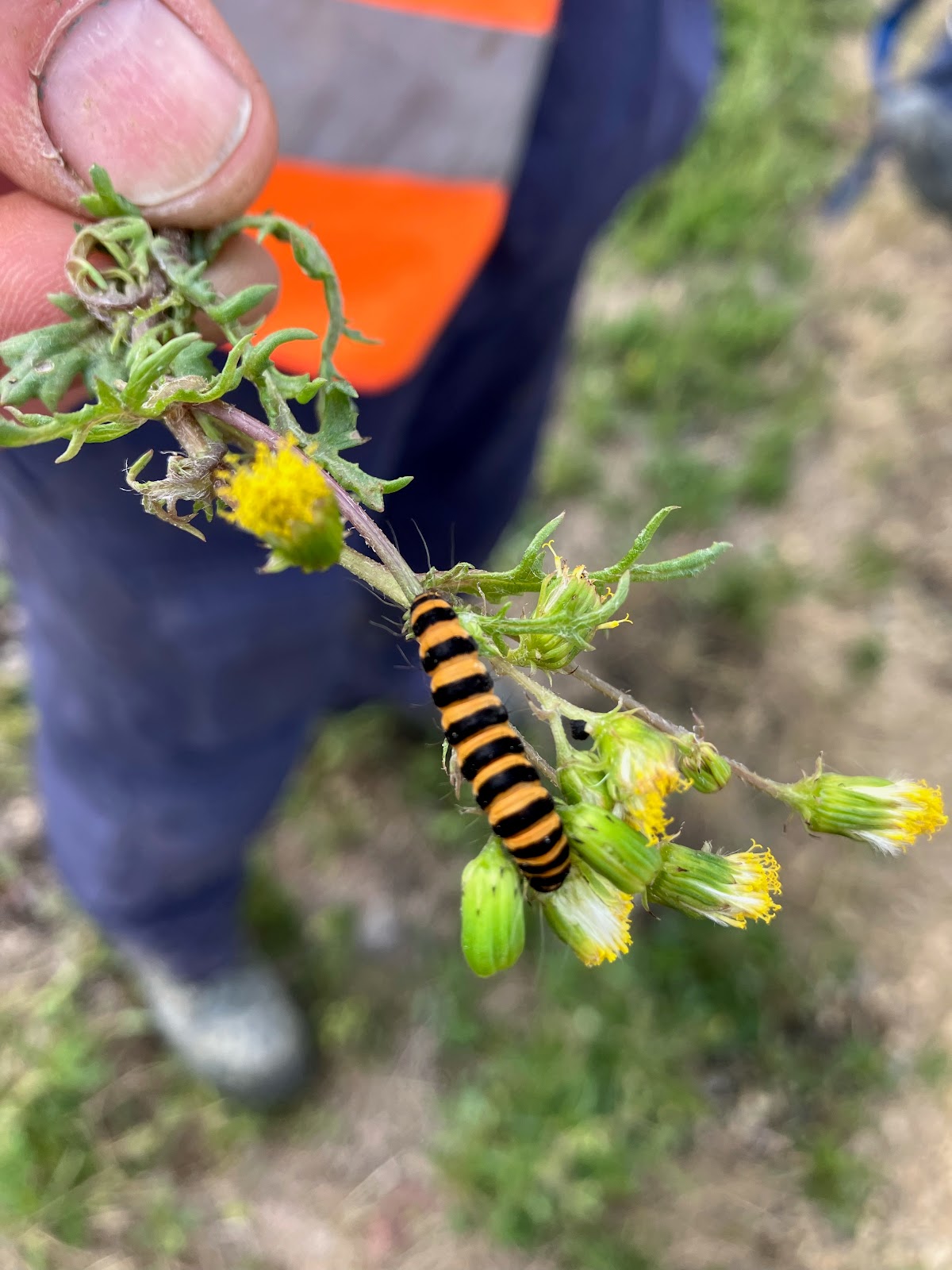
Caterpillar of cinnabar moth (Tyria jacobaeae)
Long-winged conehead bush-cricket (Conocephalus fuscus)

Cinnabar moth caterpillar

Thursday 20th July

Five team members attending, including a new to the team (but not new to the EMD) member; welcome Ian. Plus we had one contractor working.

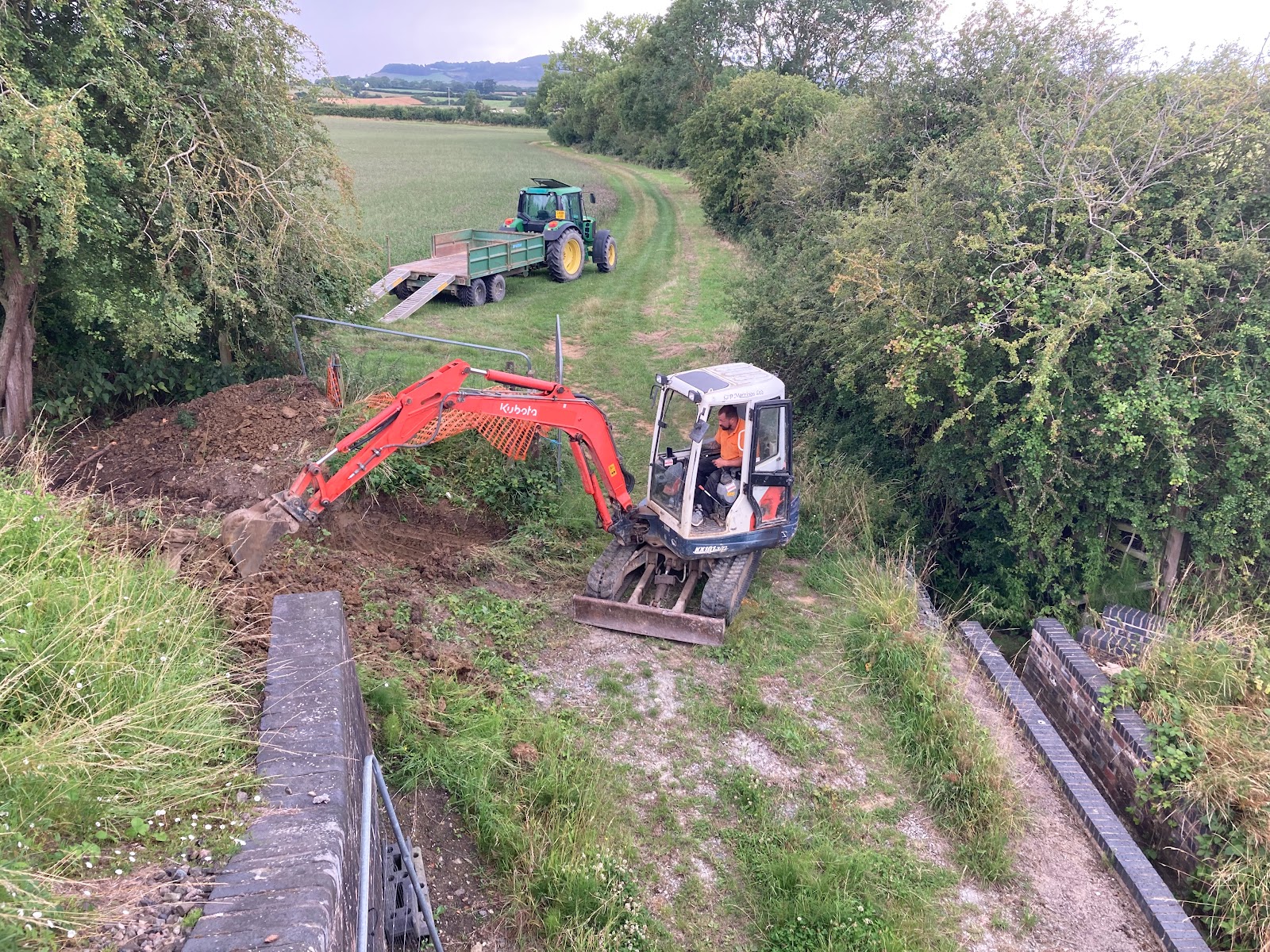
The contractor was from Graham Morrison, with a 3 ton excavator. This enabled completion of the digging of the 11A to 11B up side diversion trench at Stanton. [A major milestone!] The heavier machine with a longer jib arm made (slightly) lighter work of the clay. Not only was the last length of ditch dug out; but the pit for the exit chamber by bridge 11 and enlargement of the third intermediate chamber was completed.

The contractor's 3 ton excavator starts on the last length of trench. The tree in the hedge prevented a bigger machine from working here.

Some of the last bucket loads of clay being removed from the exit chamber alongside the farm track which goes under bridge 11.

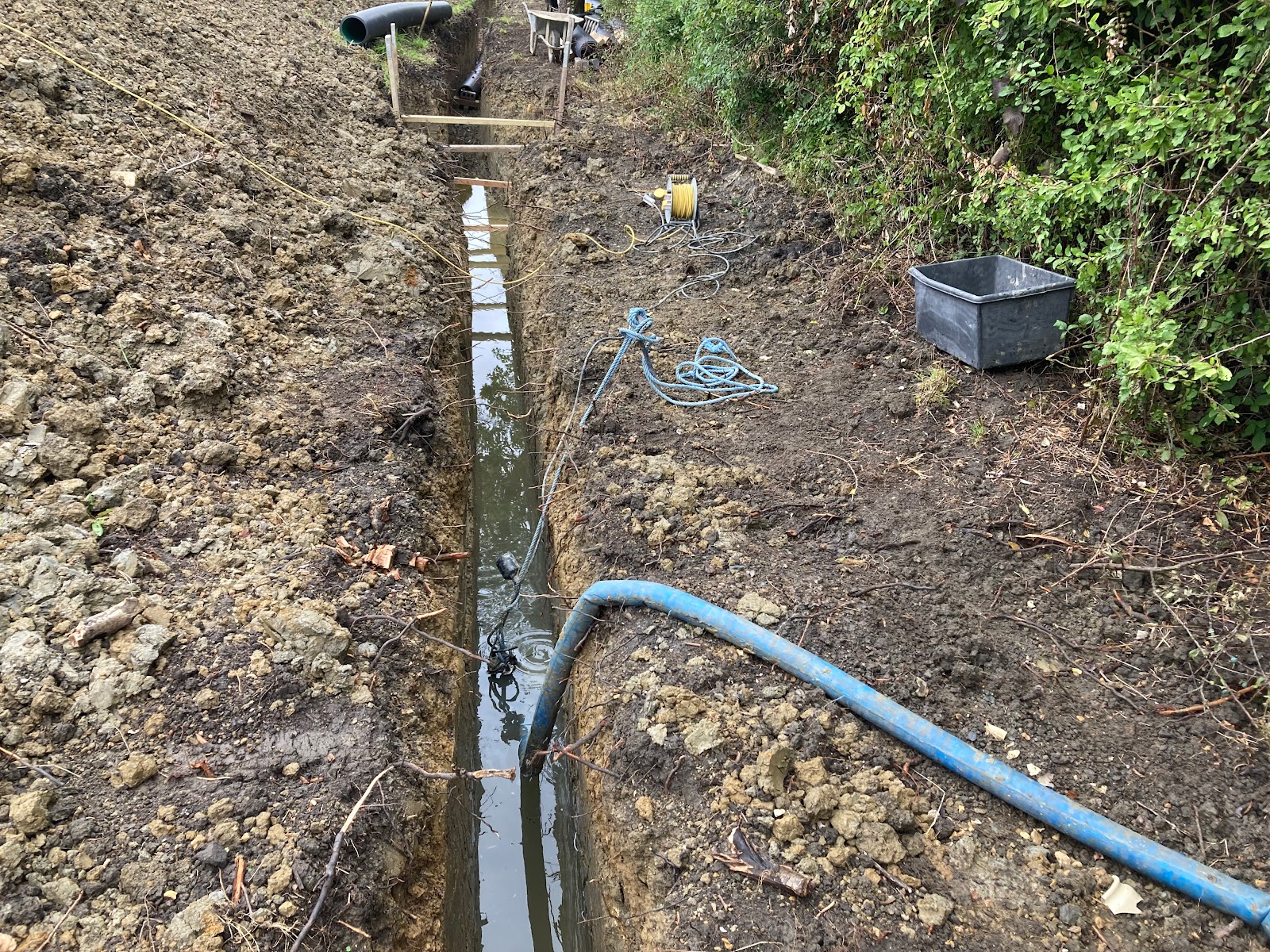
Looking back along the completed trench (towards high mileage) from the exit chamber. The S  bend is to avoid the tree roots.
 

We used our new(ish) 110v electric pump to pump out the accumulated rainwater in the third section of the ditch. Once removed we noticed a small flow in the installed pipes, this is from old land drains which now drain into the intermediate chambers.

Temporary shuttering installed in the third intermediate chamber. About the only advantage of digging in such thick clay is the the tench sides are relatively stable - unless the clay dries out. Not much chance of that this July!

Some more manual digging at the entrance to the diversion; we are slowly reducing the size of the bund.

We installed a further two lengths of pipe; packed four lengths of pipe with pea gravel and constructed safety shuttering in the third intermediate chamber. Finally we collected yet another tonne (the sixth so far) of pea gravel from Elliots.

Finally (well actually it was the first task of the day) we undertook some vegetation clearance around the entrance gate to Stanton Yard.

Wildlife report

Concentrating on birds of prey at Stanton we noticed kestrel, red kite, buzzard. Again several butterflies - species identified were red admiral and peacock.

Thursday 27th July

Six of the team in attendance to progress the up side diversion of 11B exit to 11A at Stanton. First task was to trim the pits for the third intermediate chamber and the final exit chamber; including checking for levels. Then it was laying the concrete base for both of these chambers. The exit pipe under the farm track (laid in 2019) was trimmed as the digger mauled it last week; a joint collar fitted so a short length of pipe can be added to exactly fit the new chamber.

110v pump in action emptying the water accumulated in the trench over the past week.
Ian (top) and Nigel tamping the base of the third intermediate chamber.
Exit chamber concrete base after tamping.

Exit chamber, showing the collar installed on the exit pipe installed in 2019. Notice this pit is much shallower than the third intermediate chamber, as the land falls away to the farm track running under bridge 11.

Wildlife report

Reptiles this week. We observed several lizards, we think young common lizards, around bridge 11 and at the vehicle turning point on the low mileage end of it. Also noted were two different solitary bees (large ones) - different species; but with 250+ species of bee in the UK we were not able to be more positive.

Lizards sunning on old sleeper near bridge 11. [Photo by Dave]

One of the solitary bees.

Thursday 3rd August

Nearly a full complement of the team this week - just one absence due to illness.

A picture of a train for a change. Visiting BR Standard "Mickey Mouse" 2MT 2-6-0 78019 (from Great Central Railway) on the first down train crossing bridge 11 at Stanton.


Once again all the activity was at Stanton on the 11B to 11A up side diversion. Well nearly, three of the team first went to Gotherington to collect building sand and sharp sand that a homeowner had donated as surplus to a patio construction project.

At Stanton the main task was building the brick and block lower courses of the third intermediate chamber. The pipe between the second and third intermediate chambers was packed with pea gravel - completing that section. Two lengths of pipe were laid in the last section of the trench. The level of the trench at its entry to the exit chamber was deepened; and in places the trench alignment widened to ease the bends around tree routes. There is just three lengths of pipe to lay at the exit end of the trench; plus the first length at the current 11B exit chamber.

Brick and block courses of the third intermediate chamber complete.

Already the length of pipe completed so far and the trench beyond it are carrying water; entering from the old land drains and off the embankment.

Between the second and third intermediate chambers the pipe is now complete with pea gravel bedding.

Wildlife report

Nothing significant to add to previous. However we noted a large number of butterflies (several species) on up side low mileage of bridge 11; there must be some vegetation that attracts them. Also more common lizards spotted - including some at the existing 11B outlet on the up side.

For a change we took a detour on the way back to Winchcombe to take a closer look at the Stanway fountain. This is in action on Thursdays in the summer. Located in the grounds of Stanway House, it was opened on 5 June 2004. The single-jet fountain, which rises to over 300 feet (91 m), is the tallest fountain in Britain and the tallest gravity-fed fountain in the world.