Thursday, 20 October 2022

Additions and deletions

Like all the other departments on the railway, we have quite an extensive set of documents including process descriptions, risk assessments and so on. One of the most important documents is a spreadsheet which shows all the outstanding tasks relating to the structures for which we are involved with. Each task has an assigned priority. This ranges from ‘Critical’ (currently none of these, as this category implies immediate action to enable safe running of trains) down to ‘Nice to have sometime’. During our annual cycle of visual inspections we update this spreadsheet frequently, ensuring task descriptions match the condition of the structure. Of course, we add entries for tasks to fix newly discovered issues. This year we have also been to complete some of the outstanding tasks at the same time as the inspection, thus we have some deletions from the list. Currently the number of deletions is just keeping up with the number of additions!

Thursday 29th September

Productivity of the team took a serious dive today as only three of the team were available.

Hence, the only activities were clearing and internal visual inspections of culvert 11A and cross drain 11B; plus installing a couple more blue mesh covers on the damaged concrete U channel cess drain on the up side at bridge 8 (B4632 Road bridge at Stanton). The most time consuming item was clearing the cess drain ditches which lead into 11; mainly grass but with overhanging strands of bramble from the hedges. Fortunately both were dry, as was 11B which is usually a very damp spot.

Culvert 11A has two bores; the first is a short pipe from the down side field. Usually the water level is too high to get this picture!
 
This is the exit of the first bore; into the extension of the brick channel constructed in 2019.

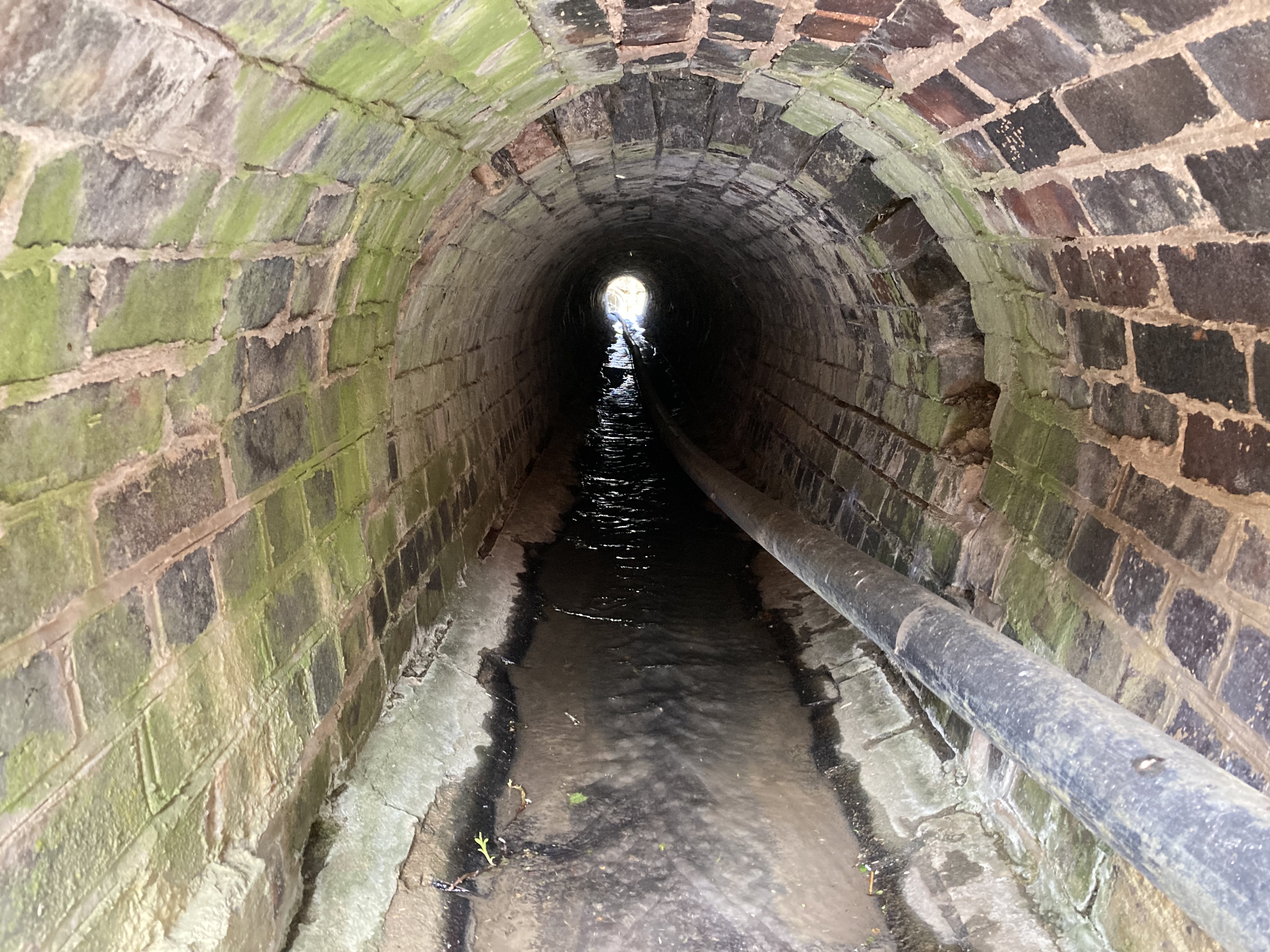
Another shot which is only possible with low water levels; the inside of the brick barrel which runs under bridge 11.

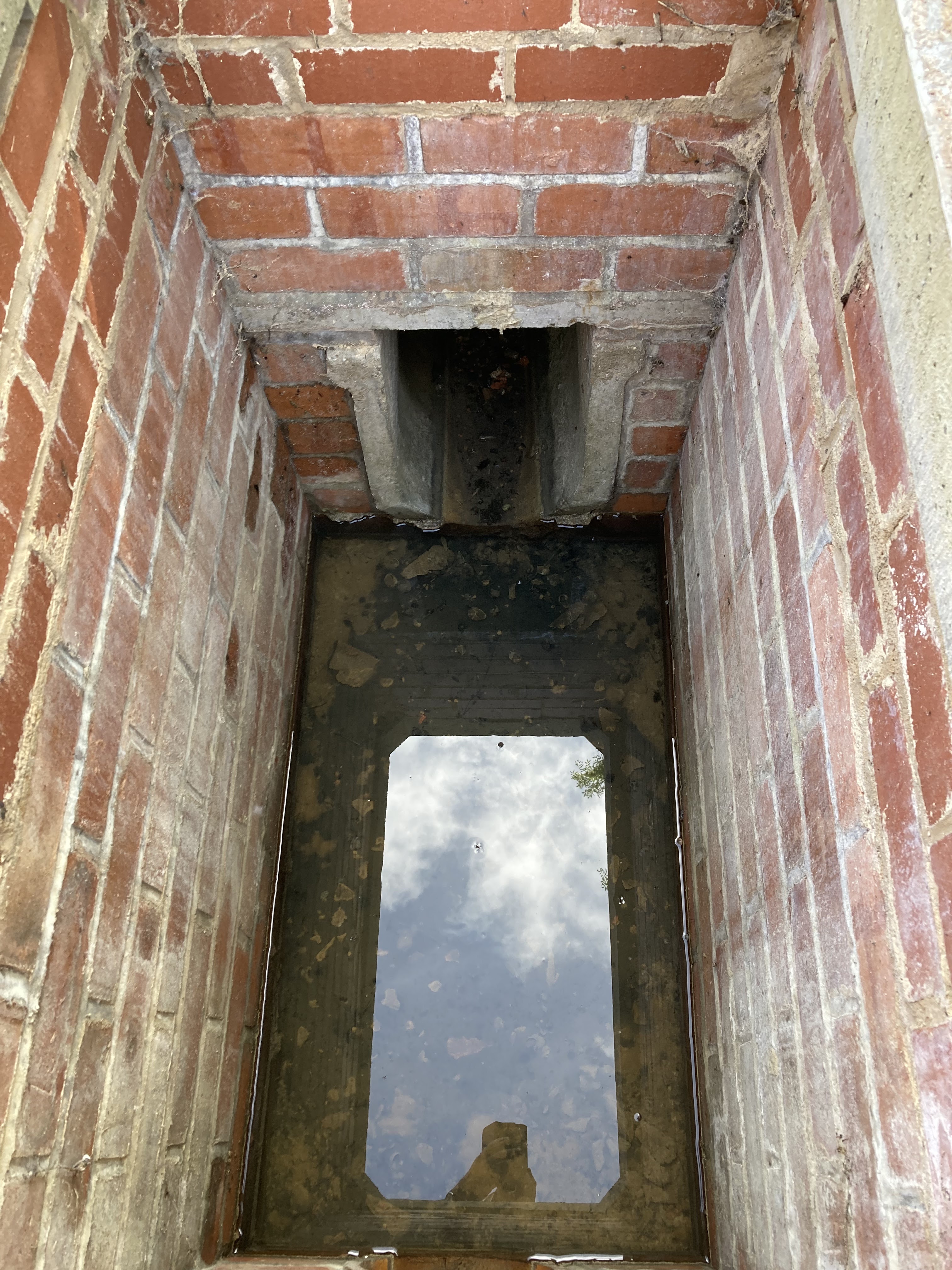
The exit of 11B on the up side is down there somewhere! Even with the dry summer the grass has grown well.

Working in a toe ditch at the foot of the embankment does mean some different views of the passing trains. Foremarke Hall on a down train rolls over bridge 11 at Stanton.
 

We also took another look at the water level at syphon culvert 7A. Unfortunately the rain in the past week had caused this to start flowing again, but only slowly. We have decided to bring forward the repair to this, starting next week hopefully before too much more rain falls.

Thursday 6th October

Back to an almost full strength team today, six again (so only one missing with a valid excuse).

We split into two groups of three. The first group undertook the clearance and visual internal inspection of culvert 11C, just south of the farm crossing between Stanton and Stanway. Once again this required quite a lot of vegetation clearance; as the last time it was dealt with was back in the wet spell in the winter when it was too slippery to cut in many places. This time it was bone dry. They also cut back the vegetation on the slip marker posts on the down side. All are still vertical and inline, so no sign of movement there. However there is plenty of evidence of past badger activity; the up side here is covered by meshing. This seems to have stopped the badgers using the setts that extended under the track.

The down side inlet of 11C. This is an extension pipe installed many years ago when the embankment was widened. The original headwall is some distance in. Eventually we will build a new headwall here!
 
The other end of 11C (up side exit). Original headwall in fair condition, but on this side the expanded embankment sits on top of the headwall.

The group also cleared around the crest manholes on the down side between bridges 10 and 11; and the high mileage access ramp at Stanton yard.

The second group headed to culvert 7A which is just on the low mileage side of the B4632 bridge (8) at Stanton. Using the big petrol powered pump they managed to remove the water from the up side outlet. The smaller electric pump was then used to keep the water level down. This enabled a closer inspection of the cracks in the headwall which is allowing water to leak into the cess. Also it revealed that the depth of silt in the exit chamber is nearly a foot. Hence the plan to dig this out manually were abandoned. Brickwork repairs were made to low mileage end of the up side headwall. The other end requires first an excavation; so next week we will deploy the minidigger for that; also to dig out the silt.

Polly repairing the 7A up side headwall. [Photo by Roger]
 

As the water flow through 7A has not increased significantly, we will now work on the up side of 7A before resuming the culvert/cross drain inspections south of Toddington.

Thursday 13th October

Only four members of the team in today, despite that it was a very productive day.

With grateful permission from the farmer we were able to get the minidigger to the top of the headwall on the up side of culvert 7A site through the adjacent field. This was a quicker and safer route than using the trackbed from Stanton Yard. Thus we were able to removed most of the silt from the outlet chamber; this was over a foot deep. Then with the small electric pump running we were able to get the water level right down; enabling a thorough examination of the bottom of the bore pipe. This revealed that the water leak is from under the bore pipe. We will obtain some rapid setting underwater cement to repair this, and the cracks in the headwall.

Some very careful digger driving by Jonathan gets the silt out from 7A exit. Bridge 8 (B4632) in background.

With the silt cleared, we can see the gap under the bore.
 

Digger job over; so exit back through the adjoining field.
 

We also used the digger and some hand digging to excavate on the railway side of the headwall to the bottom of the pipe; where the water collects when not being pumped out. This is now ready for filling with concrete – planned for next week. Our master bricklayer completed the repairs to the low mileage end end of the headwall; by replacing the original corner coping stone.

Copings replaced on the low mileage end of the 7A exit headwall.
 

Finally back at Winchcombe we fixed the flat tyre of the efco flail and made some minor adjustments to the dumper. So both of these machines are back in action. The flail had been out of use for nearly two years whilst a replacement throttle cable was sourced from the importers (the machine was made in Italy).

Sunday, 25 September 2022

Let’s Go Round Again

I’m always reminded of this song, a hit for the Average White Band in 1980, when driving around the ring roads of Stourbridge and Coventry. I’m now adding the commencement of the annual internal culvert and cross drain inspections and clearance on the GWSR. As in previous years we have started at the north end of the line, we expect to complete the programme south of Hunting Butts early in the New Year. We clear the access paths to the inlet and outlet chambers; remove silt and vegetation from the open ditches and rod out any pipes which are blocked with silt or other debris. As none of the team are qualified civil engineers, our inspections are only visual; essentially noting any obvious defects such as missing or displaced copings and cracks in brickwork. The exceptional dry spring and summer (and so far early autumn) has provided a great benefit to us. Many culverts are bone dry, and some that usually are a foot or more deep are now shallow enough to stand in with wellies. This has enabled some close up photographs of headwalls and interiors of pipes; something not possible at least for the past four years.

Our programme of inspections does not cover the large structures, such as the River Isbourne and the big culverts 17A and 42A; these are all classified as bridges. We leave those to the professional engineering teams engaged by the Bridges Engineer. We also omit the half-dozen or so culverts and cross drains that each year are included in the programme of external detailed examinations. However, for these we still have to clear the access paths and any inlet or outlet ditches.

Thursday 1st September

Six of the team working this week. Jonathan was dispatched to accompanied the external inspection team who were examining culverts 33B (Gotherington Yard) and 38A and 39A (Bishops Cleeve).

The other five started the 2022/2023 programme of internal inspections and clearance. They completed just two today - 3A and 3B at Peasbrook. There was significant vegetation growth at both. On the down side at 3A they started the repairs to the inlet wing walls, loose concrete secured and damaged bricks removed.

Down side of 3A; starting the extension of the low mileage wing wall replacing decayed sand bags over the toe drain inlet.

Another sign of a dry summer was spotted at 3A on the down side. Here a 40cm crack has developed above the inlet headwall. There is no obvious sign of a slip starting, but we will monitor this over the next few months.
Sign of the dry summer - only a trickle of water inside culvert 3B.

Final task was to clear vegetation from the unused farm gate north of bridge 4 (Peasbrook Farm). This is now fit for turning vehicles again, inserted a wooden post to mark a depression on the low mileage end.

A rare occasion when we are working on the sunny side of a passing train - and smoke box first too! P&O at Peasbrook. (I didn't request the blowing off though!)

Thursday 8th September

Once again six members of the team in today. Three members formed the construction and odd job team. They first visited culvert 3A near Peasbrook to complete the build of the extension to the down side low mileage wing wall over the toe drain inlet.

The extended low mileage down side wing wall at 3A over the toe drain inlet. (Photo by Jonathan.)

Then on to Bishops Cleeve foot crossing (Pecked Lane) to use a ratchet strap to realign the gate posts at the crossing. Both gates now working properly; now not able to go past the closing point.

It is not just drains we attend to - crossing gate at Bishops Cleeve. (Photo by Jonathan.)

The other three team members continued with the visual internal inspections of culverts and cross drains and clearance, tackling 4A, 5A and 5B north of Laverton Meadow Lane. They reported little change since the last inspections, apart from the coping crack at 4A getting marginally wider.

The crack in the up side coping of 4A - this is too wide for a quick fix of mortar. Another demolish and rebuild task to add to our list. (Photo by Dave.)

As expected after the dry summer there was no visible flow through any of them. Might be soon, as the day's showers merged into general nuisance rain, prompting a return to Winchcombe in time for a train ride to Broadway and back.

Thursday 15th September

Guess the attendance figure – yes, six again! (But each week it is a different absentee with a different excuse!).

This week all the attendees were involved in the visual internal inspections of culverts and cross drains and clearance. Structures tacked today were 5D, 5C, 6A and 6B at Laverton. 5D involved clearing of some smelly silt and a small bit of repointing.

You can tell by the colour that the silt in the up side outlet of 5D was smelly!

At 5C by the foot crossing at 6m 60c they filled the cracks between the downside headwall and wing walls; and began attending to the loose coping courses on the wing walls. Whilst there they also cleared vegetation on the footpath steps on down side.
Another tunnel shot - inside 5C looking 'down stream' from the down side.

Afternoon work was work at 6B by the other foot crossing at 7m 21c. This occupied the team all afternoon, it required a lot of clearing!

Up side (outlet) of 6B; all in good condition.

The very reduced level of water helped here. Last visit was November last year when the stream was quite high. Again whilst on site the team extended the clearance to include the lineside on the up side between the crossing and milepost 7 and quarter. This was the milepost that was lost in the undergrowth last autumn.
We will not loose this milepost this winter! Foot crossing in background.

No rain to disrupt work today; and a very pleasant temperature for manual out door work.

Thursday 22nd September

The attendance register count is still stuck at six, but one team member did sign on very early at 07:30!

The morning work involved two groups of three. The first group headed to culvert 5C at Laverton to complete the repairs to the wing walls on the down side.

5C down side, replaced bricks on low mileage wing wall. (Photo by Dave.)

The second group initially refuelled the telehandler, dumper and mini-digger; moved some items from Churchward House compound to Winchcombe Yard and repositioned vehicles in the compound. This makes more room to manoeuvre and park the vehicles. Then it was on to Stanton Fields bridge to continue with culvert/cross-drain clearance and internal visual inspections. First was 6C, a syphon cross drain. It has two pits on the down side and a single pit on the up side; all on the crest of the embankments. Also a chamber in the former six foot (between the up and down lines when the railway was double tracked), this contains the syphon wash out cover. We check this for any signs of leakage.

6C syphon washout cover. The pipe below connects this chamber to the cess drains.

The neighbour on the up side has reported standing water during wet weather. We could not find any obvious cause; so will need to return with rods and/or CCTV to determine if there is any blockage and whether inside our boundary or not. Certainly no sign of standing water today; the continuing dry spell causing this syphon cross drain to be bone dry.

Next on this was culvert 7A, another syphon just north of the B4632 road bridge (8). Again this was not flowing; and the standing water in the outlet pit on the up side was only a few inches deep. This standing water occurs as the exit ditch outside of our boundary is well silted. The low water level enabled a better examination of the cracks in the up side headwall which in wet weather causes leaks into the cess drain. Hopefully the dry spell will continue, as this will simplify the repair task. Even so it does require the exit chamber to be pumped dry.

After lunch the two groups combined to clear around the cess chambers between the aqueduct / footbridge bridge (9) and Stanton Yard.

A view that normally means getting boots wet - looking through the 'bore' of the aqueduct. (Photo by Dave.)

They also reset lids and in one case the top ring of up side cess chambers which had been dislodged, probably by a road vehicle. Finally the turning point immediately on the low mileage side of under bridge 11 was cleared. This will enable safe parking clear of the running line when we return to continue the inspections with culverts 11A, 11B and 11C.
Not our work! Walsh have resumed work on the River Isbourne bridge at Winchcombe. This includes replacing the last 20 yards or so of the pipe which takes most of the water from south of Greet tunnel that flows through the 6 foot drain at the station. A new inspection chamber will be built over the opened section of the pipe. Installing this new pipe was a tricky job - the flow of water could not be stopped. At least the flow was much reduced!

Saturday, 27 August 2022

End of the Dixton Summer

Our work at Dixton Cutting over the past three months neatly coincided with the metrological summer, both coming to a close at the end of August. Removal of the broken red house bricks has made a big visual improvement. By using concrete rings from the bargain purchase a few years ago, the outlay on new materials has been minimal. From next month our attention turns to the annual internal visual inspection programme for culverts and cross drains. We hope the dry spell continues for a while, shallow or no water in the ditches makes this task a lot easier!

Thursday 11 August

Five of the team members attending on this very hot day.

High summer in Dixton Cutting. Diesel hauled train (Peak 45149) due to fire risk; deep blue sky; dry grass. But at least two cess chambers were in the shade.

Main task was to continue with the cess chamber rebuilds at Dixton cutting. Fortunately most of the work was in some shade. We took another seven concrete rings from Winchcombe to site. Five of these were installed on prepared chambers. Additionally we fitted a second ring to one chamber we dealt with last week; and replaced the permanent lids on that and the others from last week.

Polly puts the finishing touches to the flaunching on an down side chamber.

We are now at the point on both up and down sides where the cess drain is the concrete U shaped channel.
Square U section channel at the low mileage end of this down side chamber.

On the down side most of the lids for this (probably dating from the 1950s) are fine, there are a few that need replacing. On the up side most of the channel has a porous plastic pipe backfilled with pea gravel. There are several inspection points with concrete lids. We marked some of these with poles sprayed yellow & blue to make them more obvious; we don't want any more vehicles driving over them. There are a few more to mark.
Another sign of the dry summer, just a trickle of water in the Tirle Brook, the flume culvert 32A.

Secondary tasks were the installation of a finer mesh on the inlet grill of culvert 39A, Pecked Lane Bishops Cleeve. This will stop small twigs and leaves getting into the main culvert and the twin pipes which lead out under the neighbours property on the up side.

Clearing small debris from the outside of the inlet grill of culvert 39A will be a lot easier than from the inside.

Also our plant operator moved some items for C&W, including a pallet of brake blocks.

Thursday 18 August

Six members of the drainage team working today.

Once again we lent our plant operator out to another department, this time C&W to excavate an area next to the C&W workshop. However we did get a few minutes of his time using the dumper to move concrete lids in Winchcombe yard. First time the dumper has been used by Drainage!

Using the dumper to move concrete lids.

The other five members headed to Dixton cutting. We replaced the proper lids on the cess chambers which we rebuilt last week, recovering the blue mesh covers. As we are now very close to completion of the cess chamber rebuilds, we recovered all unused bricks, water, sand, cement and tools. On the down side we made good three sections of concrete cess U channel using the original lids. On a fourth section we inserted an old narrow concrete lid to repair the broken U channel blocks. Ballast which was in the channel was removed.

Repair to broken U channel on the down side cess. Replacement sections and lids for these are no longer available.

On the down side we added a concrete ring to the last chamber where the concrete U channel ends.

The last chamber on the down side.

On the up side we dug out what we think is the last lid on the concrete U channel. The channel is filled with ballast/rubble. We dug a few exploratory holes to try to locate the path the channel takes down to the high mileage up side wing wall of bridge 32. Nothing positive, this will need some further digging, which can also include the ditch by the boundary fence. This will need the mini digger and our operator and also some softer ground conditions.

Three team members popped down to Bishops Cleeve to clear the grill on the boundary fence inlet of culvert 39 (Pecked Lane Crossing). The heavy rain on Tuesday night had brought down a lot of leaves and twigs. Removing from the grill is easier than cleaning inside the manhole in the up side path where our oblong bore flows into two circular pipes under the driveways of the houses.

Wildlife today was lizards.

One of the lizards which inhabit the chambers; moved to avoid squashing by the new concrete ring.

Thursday 25 August

All seven of the team present last Thursday. But as usual, we loaned our plant operator, not sure exactly to which department, to operate the mini-digger for digging the trench for the electric cable for the new shipping containers in Winchcombe Yard. At least one of those containers is for the Estates Management department.

The other six members headed for Dixton Cutting to complete the last tasks on the cess chamber rebuilds.

Before taking the road vehicles across the line at Gotherington Yard we await the passing of the 0915 Toddington to Cheltenham ECS train. Left to right: Dave; Martin; Polly; Roger; Nigel.

Today was the last working day of visiting 2-6-0 Ivatt 46521. Note the correct ECS lamp code.

Also replaced some of the broken lids on the down side concrete U channel using odd small chamber lids.
A mixed bag of lids, but at least they keep the ballast out of the U channel.

We left the 'new' chamber on the up side just before Prescott Road bridge with a blue mesh cover. This is temporary, we want to monitor what is happening there when the wet weather returns. There is buried concrete U channel heading towards the high mileage up side wing wall of the bridge, but it is blocked with ballast and other debris. If we do notice any water pooling there, then some digging with the mini digger will be required to put in a new pipe to the boundary ditch.
Up side new 'chamber' added where the U channel currently ends.

The external inspection programme is now to include culvert 31B, as this is really integral to Prescott Road bridge 3. The main clearance was by the outlet catch pit (low mileage up side); mainly to expose the edges of the pit prior to the visit by the external inspection team. We removed all the broken and loose pieces of the old fence. We trimmed the vegetation on the roadside by the bridge abutment and up to the inlet chamber which has the road kerb stones as covers.

Culvert 31B outlet, the catch pit has over 2 foot of soft silt in it. Still a trickle of water running.

For the first time for months it was raining at lunchtime, so we used the Churchward House mess. After lunch one group surveyed the chambers on the down side crest between Greet Road bridge and Greet tunnel. There is one that needs an additional cover, and one that needs building. This later one is our side of the boundary fence to the one that we built in the farmers field earlier in the year.

Down side crest near Greet tunnel low mileage - we will be building a new brick chamber here. Photo by Roger.

The other group cleared the access to the down side of the River Isbourne bridge 21A in preparation for the external inspectors. We cleared the rope handrail section and around the metal safety rails over the portal and wing walls. It was not possible to clear all the way down to water level as the ground is too steep and the vegetation too dense. This will need to be done, by approaching along the line of the ditch that runs behind the wooden shed.

Down side access to the River Isbourne is a lot safer with no vegetation covering the handrails and safety rails.

Saturday, 6 August 2022

Rings, and more rings

The main task of the team continues to be the rebuilding of the cess chambers in Dixton cutting.

Thursday 28th July

All seven members of the drainage team in attendance yesterday. We lent our plant operative to take the mini digger to Toddington to assist with excavating a new concrete area by the unloading road. Unfortunately the digger developed a fault with one of the hydraulic pipes - plus the trailer got a flat tyre.

The other six of us headed to Dixton Cutting to continue the cess chamber rebuilds. Another four were completed with concrete rings; two had the top courses of brick repaired; and one the top course of brick was removed ready for a concrete ring. As we are now working beyond (that is north of) the Gotherington down distant signal; there is room to park the vehicles and set up the mixer track side. This meant a lot less time ferrying materials and equipment to where needed. Together with six working, we actually came to a halt because we ran out of concrete rings on site. Anyway it was getting rather warm by early afternoon.

An up side chamber mortared up ready for the concrete ring.

 
After ring placement, the next job is flaunching the side. That is smoothing the mortar into a diagonal. This chamber required some internal repointing. Not many left now with the infamous distant signal wire in the way!

Martin & Roger start on removing the damaged brick courses of an down side chamber.

Placing the concrete rings into position is a team task. They are heavy!

Dave clears the vegetation from an up side chamber. Looks like this does not need any demolition, just concrete ring added to raise the height.


Thursday 4th August

Another day will a full team attendance of seven.

The plant operative went to Toddington to collect the mini digger which needs some new hydraulic hoses fitted. He spent the rest of the day cleaning the trailer of spilt hydraulic fluid and using the telehandler to move some lengths of wood for C&W at Winchcombe.

The other six team members headed to Dixton Cutting. Thy took another seven concrete rings from WInchcombe. These certainly speed up the rebuilding of the cess chambers, particularly where there are no courses of brick which need patching. On a couple of chambers, we removed all the bricks on any damaged course - this will mean a couple of chambers will have two concrete rings added. With a team of six, progress is rapid, three rings had been laid by the time the first up train passed. The temporary blue mesh covers on the chambers completed last week were replaced by the proper lids. One chamber required a new lid. On the demolition front we prepared another six chambers. We now have reached mp 14 3/4; over half way in terms of distance. More than half way in terms of chamber quantity, as there are now fewer chambers on the up side.

Dixton cutting in the summer - an idyllic spot! Looking south to bridge 33 and the chambers we have completed.

 
A completed down side chamber, reusing all the existing lids.

A completed up side chamber. A mixture of lids, a new own make on the left and probably an original GW big lid on the right.

Dinmore Manor passes the work site at mp 14 & three quarters with an early afternoon down train.

Once again the heat of the afternoon meant an earlier finish, plus the requirement to bring yet more concrete rings from Winchcombe.

Final task for the day at Dixton was to shift a length of rail from the middle of the vehicle track to lie alongside another length by the ballast shoulder. It did take all of the coordinated bar work with six people to shift it. It was moved as the previous day a road vehicle suffered a punctured tyre when driving over this length of rail. The vehicle involved had been left at Gotherington yard; so we recovered it after supervising the tyre replacement by Ski Tyres.

The team take a breather after barring the length of rail from the middle of the vehicle track on the up side of the formation. The photographer had been using the bar on the ground - so it was a full six man shift.

 
The perfect way to end a day of physical work. Cup of tea from a china mug, sat at a table and watching trains. Martin, Dave and Roger watch Dinmore Manor pull in to Winchcombe.

Nature corner

For this entry the subject is spiders. So arachnophobes stop reading now!

Big black spider on an egg sac. (Photo by Dave)

The large black spiders we saw in one of the chambers are either the European Cave Spider (Meta menardi) or the closely-related Meta bourneti.

The European cave spider is not dangerous to humans and although (in common with nearly all spiders) they have venom, its effect on large mammals is negligible. They are unlikely to bite if carefully handled but if sufficiently provoked they are capable of inflicting an unpleasant "nip". They are non-aggressive and generally slow moving and are regarded (by arachnophobes) as "gentle giants". So no need to panic! The cotton wool balls are egg sacs, tear-shaped white pendants (sometimes with a slightly yellow centre) usually hanging from the roof of the habitat by a silk thread.