Sunday, 9 August 2020

Getting back slowly

Week Ending 8 August 2020

Looking back at our budget for 2020 we should have by now finished off at Royal Oak and moved on to south to the next job. Added to that, a couple of contractor jobs should have been completed, but alas lockdown got in the way. There's a possibility that we may start some proper work in the not too distant future, but it's still a bit vague at the moment.

Tuesday 4th

What happened this week? On Tuesday Dave and Nigel headed off south to do some culvert clearing through the Bishops Cleeve environs. Starting at Culvert 38A and working down towards Kayte Lane. Culvert 40A escaped their attention, but it is well hidden and it's a siphon.

First batch of images are from Dave. 


Culvert 38A Down Side 

Culvert 38A
Nigel disappearing along the down side ditch 
Culvert 39B Two Hedges Road Siphon 

Culvert 40B Up Side 
Culvert 41B Down Side 
Culvert 41B In Side 😊
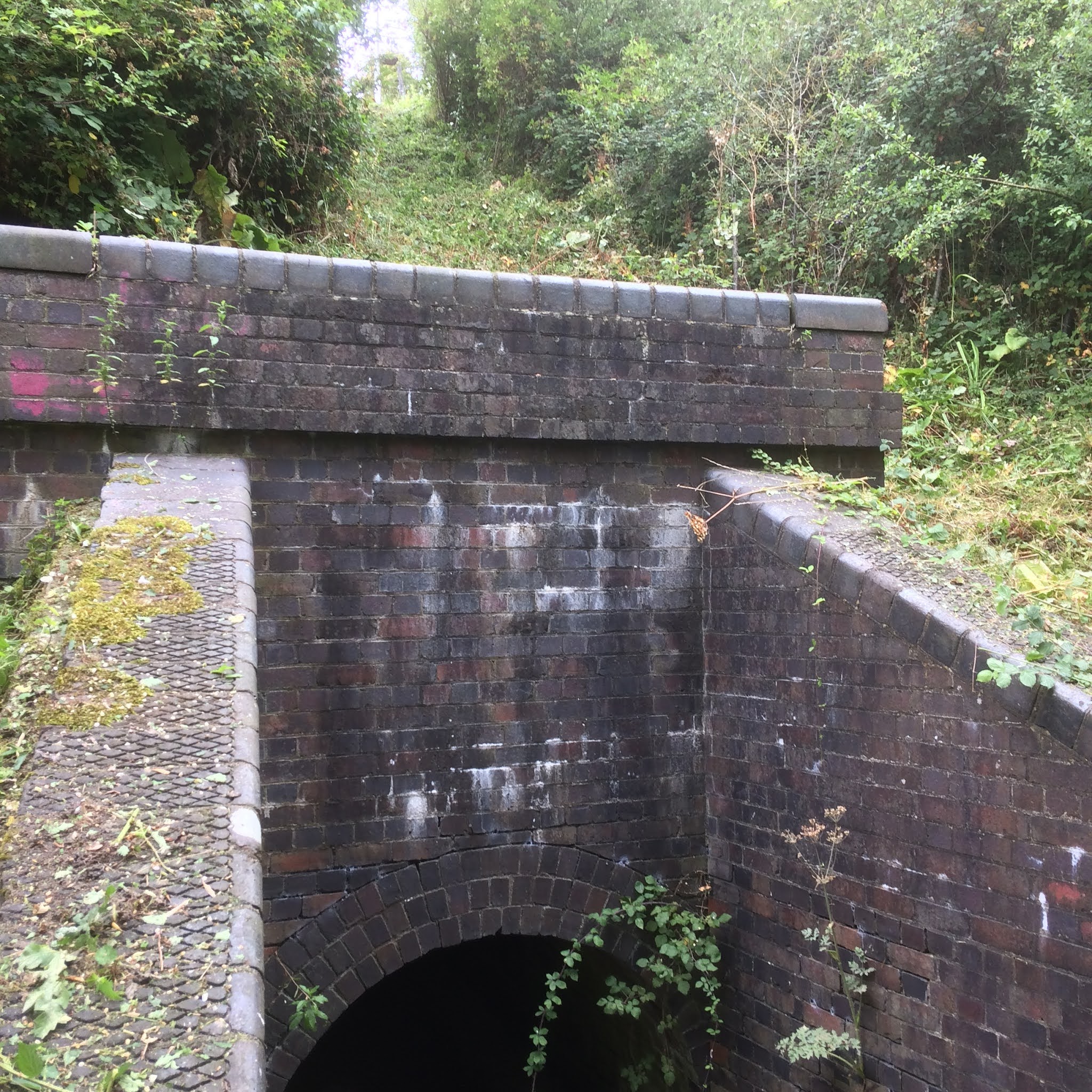
Culvert 41C Double Siphon at Kayte Lane 
Down side 


Thursday 6th 

Andrew and Martin tackled Culvert 42A at the Racecourse then went and had a look at Southam Lane bridge where we dropped a new drain in late last year. On the way back to Winchcombe, they dropped in at Royal Oak to see if they could find our building site. 

Next batch of images from Andrew. 

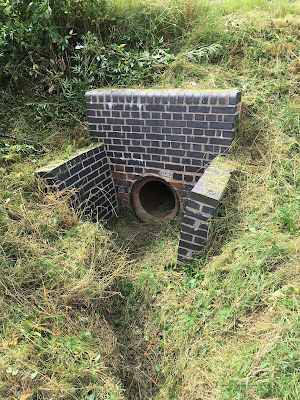
Culvert 42A down side headwall 
Culvert 42A Down Side Wing Wall 

Culvert 42A up side headwall 
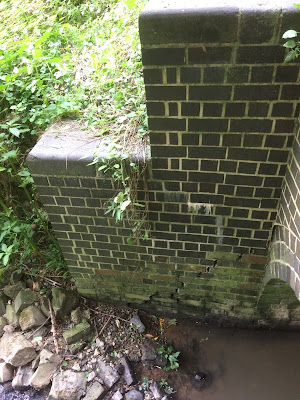
Culvert 42A up side cracked wing wall 
Culvert 42A up side 
Bridge 42 Southam Lane 
Abutment drain 
Bridge 42 Southam Lane
low mileage wing wall drain 


Round at Royal Oak, the situation isn't as bad as it could be, the vegetation has taken hold, somebody or something looks to have set up home in out concreting ballast pile. 

Culvert 24A up side, the fence is back 
Culvert 24A up side, it's work in progress still 


At Culvert 24B on the down side, the landowner has stuck a pipe through the fence into the end of the culvert. There's an overgrown ditch here, so presumably it's going to be reinstated. 

Culvert 24B down side with the new pipe 
Culvert 24B down side headwall
To be replaced with a chamber 
Culvert 24B up side 
The concrete ballast pile hotel 


Andrew noticed that the signals at Cheltenham have been repurposed. With no trains visiting for best part of 5 months they have been taken over by Starlings. 

CRC Outer Home roost 


Friday 7th 

Stuart along with Roger on his first day back headed off to Peasebrook for a final batch of levels. This was to capture the profile over Culverts 3B and 3A. The heat was building fast so diving up and down the slope was good way to shed the excess lockdown weight. 


Peasebrook Farm - Looking north 


During the week, there's been a ballast drop along the up side shoulder, it's obliterated the distance marking we painted on a couple of weeks back. 

The up side ballast drop 
Spot the yellow paint  
Peasebrook up side, out to Bredon Hill 
Peasebrook up side to Childswickham 
Culvert 3B up side, Roger sorting the staff out 
Peasebrook down side, not much slope to the Cotswolds 
Peasebrook up side 
A bit of rain blowing through 


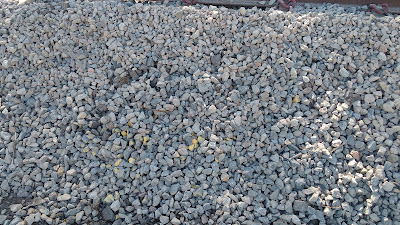
On the way back we called at Stanton Yard to see what kit we had stashed away there, just a few bricks, some bags of ballast and 20 tonne of pipe bedding stone. Not much help for immediate building works. 

Stanton Yard gate, somebody 
has been keen get in or out 


That's it for this week, wondering now what to start on next. 


Saturday, 1 August 2020

The Perils of Peasebrook Farm


Star Date July 2020 


The 'Phasers on Stun' call came through to Drain Gang HQ from Star Fleet Command on the 10th of July. Well perhaps it would have if Captain James T Kirk had driven a Long Wheelbase Ford Transit Crew Cab with a tail lift. It's not so much Warp Factor 5 as 0 - 60 in 2 days, 14 hours, 22 minutes and 7.364 seconds. Anyway, that's all irrelevant, but we did get the diversionary call to say 'Drop the Bridges' and head back north to just beyond Bridge 4 at Peasebrook Farm. A track defect had been spotted and there was a concern that the embankment may be the cause. 

Peasebrook Farm Embankment t
Peasebrook Farm Embankment 

After the slips at Gotherington and Winchcombe last year, there's a heightened focus on the stability of the tipped clay embankments. When they were built between 1903 and 1905 they didn't have things like the Caterpillar CP74B Compactor with a vibratory roller weighing in at 16.3 tonnes. They did have horses and carts though, plus some construction tracks. Although the earthworks have largely stood the test of time, the increased loading over the years can take a toll on the underlying structure. 

Peasebrook isn't on the side of a hill like Gotherington, the land is bordering the Vale of Evesham, good growing land, and it's reasonably flat, not quite Norfolk but not the Cotswolds either. Our mission was (and still is as it's not completed yet) to clear a lot of vegetation so that the earthwork can be examined. An added bonus job is to take levels across the formation to draw cross sections for reference.

Looking over the up side to Bredon Hill 
Looking south from Bridge 4 

Dave and Nigel were first on the scene, they took out a 20m slice of the up side slope vegetation, and found nothing untoward. Just a few rabbit holes that were mostly inactive, no sign of cracking or slippage.

First section of the up side slope cleared
(Photo: Dave) 
Nigel takes a breather, it's tough going after lockdown
(Photo: Dave) 

Andrew and Martin were next into the fray, they took a strip off along the top of the slope to expose any deformation of the earthworks. 

Looking north towards Broadway before clearing
(Photo: Andrew)
Top 5m of the slope cleared, looking north
(Photo: Andrew)
On of the rabbit holes exposed
(Photo: Andrew)
Martin hiding in the shade, it can be hot work
(Photo: Andrew)

Because it's still bird nesting season, a survey is carried out each morning to see if there is any flying activity prior to clearing. The bottom 2/3 of the slope has been left to minimise any interference. Luckily the only activity we have seen is the buzzard wheeling over the fields and a few pigeons looking for the pig food in the adjacent field. 


Strip along the top of the slope to Culvert 3A cleared
(Photo: Andrew) 

Next job for Dave and Nigel was cutting a path down to the fence every 11m for the levels to be measured.

Dave's clearance viewed in artistic mode
(Photo: Dave) 
Martin doing flail training while clearing the side of the access road

That brings us nearly up to date, some of the levels have been measured and more paths cut out for even more levels. The Permanent Way department have been here in between times and unclipped the rails and are now busy re-clipping them to the sleepers. 

Looking north Pandrol clips laid in the 4', rails unclipped 
Looking south from above Culvert 3a
USS Enterprise parked up in the shade 😂😂😂
First down side path cut to get a profile measurement 
Looking north for no particular reason 
Martin sorting out the measuring staff 
Levelling along towards the 5 3/4 mile post 
Martin down the down side toe with the staff 


One similarity with Gotherington is that there are signs of historic repair works, this can be seen by the proliferation of ash and clinker on the slope.

That's all caught up then, it's 15 days work completed since mid-June, just 31 FTE days. Last year in the same period we completed nearly 100 days on the Culvert 11A rebuild work. This COVID-19 has certainly taken a toll on productivity. Until trains start running again and visitors start to come back, the work at Royal Oak that we were engaged in back in March will remain stalled. With zero income for 4 months and the usual bills and wages to pay the railway finances have suffered, there's no spare cash for the jobs deemed not essential for getting trains running. 

One job that can't wait is the structures inspections, legally they must be done within set periods. Our Bridges team are organising these for later this month. One of the structures on the list was Culvert 31B under Prescott Road bridge. This has been a silt magnet for many years as the downstream ditch is virtually non-existent, there's a bit of 6" pipe but the ditch it flows into has become overgrown, so it probably isn't working any more. The wall rebuild on the outlet ditch was in the work programme for this year, but it got the chop along with some other drainage jobs. 

The end channel on 31B was cleared by a contractor with a min-digger earlier this week and on Thursday the jet/vac arrived to blast the silt out of the brick arch. On the way back to Winchcombe we did a detour to see how they had got on. 

Jet/Vac tanker at Culvert 31B 
The freshly dug ditch on the us side end of 31B 

The report on the jetting told us that 6,000 gallons of water had been blasted into the culvert, 4 tanker loads, but the compacted silt had proved to be a bit too stubborn. One solution suggested to clear the remainder was sending a man in with a shovel. That may work if we can find a thin volunteer who can breathe underwater. You can bet that shovelling it out by hand would take less time than creating the risk assessments and sorting all the other health & safety requirements out for the job 😉


Silt deposits remaining in Culvert 31B 

In other news, the Lineside clearance department have come to the rescue at Culvert 32A in Dixton Cutting. For some time there has been a problem with fallen branches. Drainage currently have no volunteers who are chain saw qualified so a call went out to Clearance and they stepped in and got the job done in a couple of days. Thanks very much team, it looks a load better now. 

Culvert 32A, Lineside Clearance at work near the down side fence
(Photo: Clearance Team)
Culvert 32 inlet stream - Tirle Brook
(Photo: Paul V) 
Culvert 32A, down side
(Photo: Paul V)
Culvert 32A Dixton, from the down side fence
(Photo: Paul V)

Hopefully if the blogger gets his act together we can get back to a more frequent update regime. 

Thanks for reading