Sunday, 20 October 2019

More of the same

Thursday 17 October

More vegetation clearance today as there was only Andrew, Alastair and Dave in. They took the scenic route out to Manor Lane at Gotherington, caught out by the water main rehabilitation at Gretton (not sure how anyone would even start to 'rehabilitate' a water main, but evidently Severn Trent do). The targets for clearance were Culverts 36A and B, but they managed to squeeze Culvert 35D in as well.

All the photos today are from Alastair. 

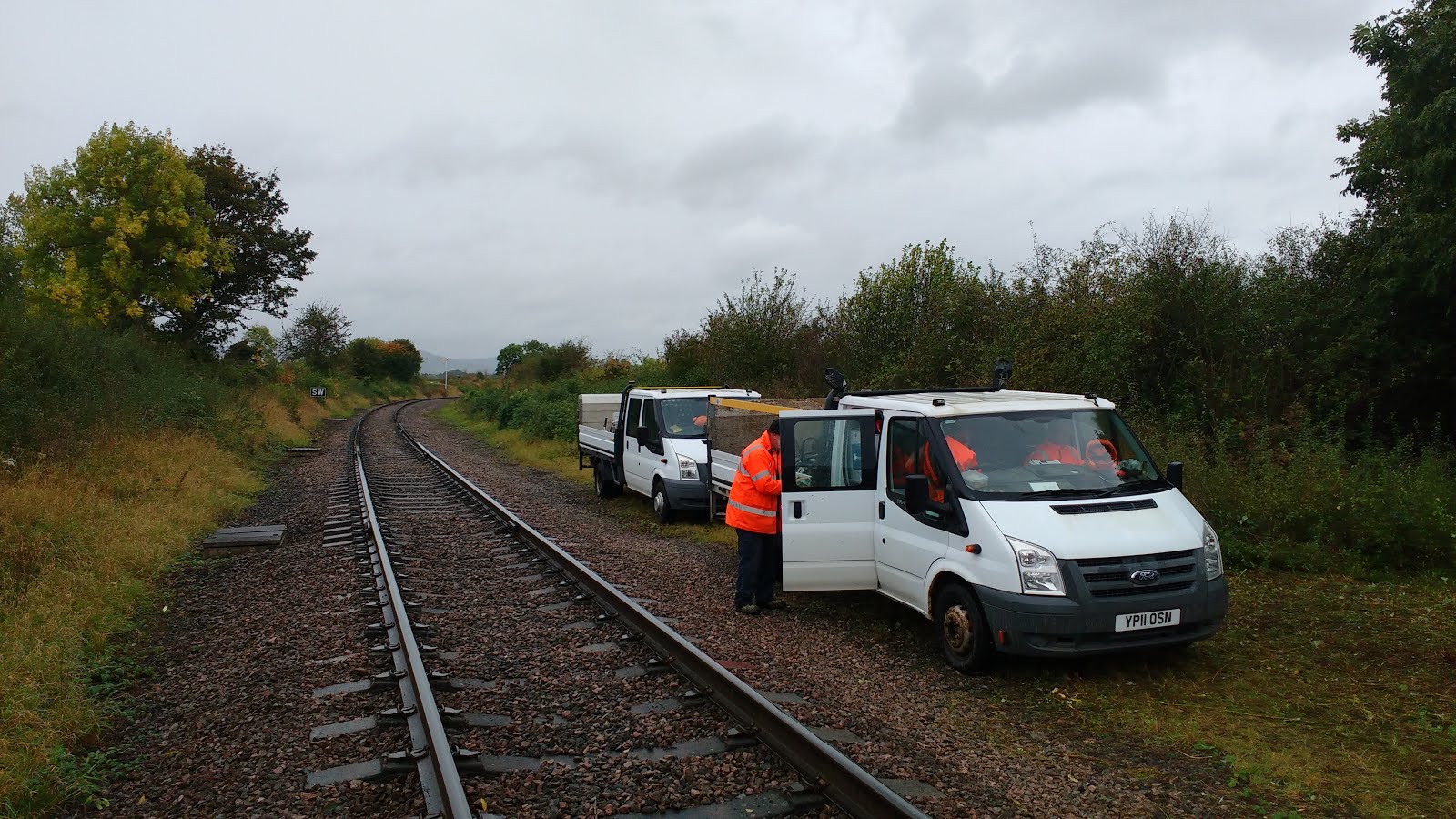
First job is to clear a parking space
Andrew cuts around the truck
Culvert 36A inlet
Culvert 36A inlet chamber, flowing well 
Culvert 36B down side inlet, possibly 😊
Found the fence around 36B inlet


Culvert 36B inlet (Down side)
Culvert 36B up side outlet
Culvert 35D up side outlet 
Culvert 36A outlet along Manor Lane 
Culvert 36A outlet headwall 


Saturday 19 October

Food and Drink fayre today so Winchcombe Station was busy when we left, as the vendors were unloading and setting up. Only three of us venturing out this morning, but we have a varied agenda. Roger needs to put some bricks back into the wing wall on Bridge 10 at Stanton, there's still some culverts to clear on the way up to Laverton, measurements are needed for the pipe that will link 11B to 11A and there are more candidates for the confined space survey. 

While Roger did the bricks on Bridge 10, Stuart wandered down to Culvert 11B to check a few measurements so that the job can be costed to make sure it's viable to start this financial year. The other works we did at Stanton this year were checked as he passed. 

Stanton down side crest outfall, running well 
Stanton crest rebuilt chamber, down side 
Culvert 11A outfall 
Bridge 11, new gully drain doing its job 

Down at Culvert 11B the recent wet weather has left the toe of embankment very wet, our next project is to install some drainage pipes to get this water over to the up side and way to Culvert 11A.  

Cuvlert 11B down side toe, water ponding 
Culvert 11B outlet can't take the flow 

Back at Bridge 10 Roger was putting a couple of bricks into the north east wing wall. This isn't a repair, it's to monitor the top of the wall to see if it is still moving. The wall will be checked to see If the mortar and bricks separate over the winter, that's the sign that all's not well. 

Roger replacing a brick
(Photo: Alastair)  
Brick pointed up
(Photo: Alastair) 

We moved up to Culvert 7A to start clearing and to investigate the sound of falling water Alastair heard a couple of weeks ago. 

Long shovel at Culvert 7A outlet 
Long shovel down the side of the headwall 

Water is escaping through the brickwork on the outlet side headwall of the siphon, it looks like the mortar has washed out. Probably the main contributory factor is that the downstream ditch is silted up. The landowner has planted trees in what used to be a field, this means that maintaining the ditch is now virtually impossible. Over the 40 years the line was dormant the brickwork has decayed and the mortar washed out. Next problem it to find where the water is going as the up side cess isn't flowing very fast.  

Roger watching Alastair digging out 
Stuart and Roger improvising a post hole shovel 😊
Alastair digging out the side of the headwall 
Leaking headwall 

Tracing the water is fairly easy with the fluorescent dye, if you have a suspicion of where it'll come out that is. 

Dye going in at the up side headwall 
Chamber up from the siphon on the down side 
Chamber on the down side 3 minutes after the dye went in 

From this it looks like the water is running back under the iron siphon pipe and getting into the down side cess drain. 

Culvert 7A Inlet 
Culvert 7A Outlet after clearing some brash out to the ditch
Level down by 2 brick courses 

We have gone away to think about this one, it looks like more excavation will be required but winter isn't the best time for doing a repair here. 

Then it was on with the culvert and chamber clearance. 


Stuart cutting around the first chamber
(Photo: Alastair) 

The drain run form the Aqueduct to Culvert 6B is around 1.17m in length. The first 430m is in a covered concrete channel. The first chamber is at the transition point to piped drain. The chamber has extra feeds from he road drains, the crest, the field and the wing wall. 

Chamber at the transition point
Inlet channel form the north 
Inlet from the pre-cast concrete channel 
Chamber cleared 
Roger clearing the up side chambers
(Photo: Alastair) 
Stuart measuring down to the top of the 1.8m measuring pole
(Photo: Alastair) 
Culvert 7A down side cleared 
Surprise visit by GWR pannier tank 9466, out on a test run 

The chamber survey involves dipping the depth and checking for other pipes besides the cess run. 


Roger looking for spiders 
Alastair looking for chambers 

Some chambers have marks left by previous civilisations, a bit like hieroglyphics. Not sure if the Ancient Britons had spray cans 😏 The next siphon, Culvert 6C, crosses the drain in the 6' and the inspection plate protrudes into this chamber 

Cess drain meets siphon culvert
The cess drain is up to 18" pipe by Bridge 7 


The information being collected about the chambers is turned into a schematic and added to the asset database so that we can manage future maintenance. 

Section of cess drain surveyed 

Lastly we've recruited a new team member, Michael rescued this little fellow from the stream in Winchcombe Yard while brushcutting last week. He's destined to become the team mascot, his dishevelled appearance fits in well 😊 

Ted, the drain gang mascot 

Tuesday, 15 October 2019

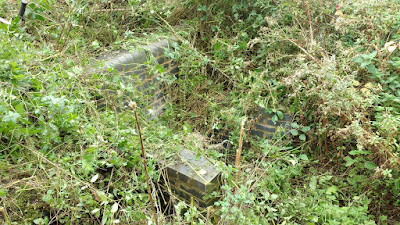
The phantom bridge

Monday 14 October

Change of scene today, still following the theme of clearing vegetation and preparing for the upcoming structural examinations. There were 5 of us today and with poor weather forecast, we quickly headed off to Bishops Cleeve to open up Bridge 41. This is the phantom bridge, we're not talking McDonnell Douglas F4 here, it's just an occupation bridge that is no longer used. It had the ends filled in some while back to prevent it becoming a congregating point for vandals. After doing the bridge and clearing 3 culverts, a start was made on recording the chambers along the drain run past Kayte Lane and Southam Lane to the racecourse.

Pecked Lane Crossing looking south, grass needs cutting 
Making a start at Bridge 41 
Bridge 41 up side 
Under Bridge 41, signs of historic occupation in the troughs
(Photo: Alastair) 
Dave digging out the down side to ventilate Bridge 41
(Photo: Alastair) 
Culvert 41B, Roger appears from the weeds 
Stuart heads south with the flail
(Photo: Alastair) 
Culvert 41B up side chamber 
Just a trickle at Culvert 41B up side 
Culvert 41A down side, Dave in search of the headwall 
Culvert 41A up side, Nigel takes the long way round 
Culvert 40B down side, Roger looking for another headwall 
Culvert 40B, part cleared 
Culvert 40B down side, Roger raking clean 
Culvert 41A down side 
Culvert 41A down side headwall 
Culvert 41A up side 
Culvert 41A up side headwall, no sign of water 
Culvert 41B down side, Alastair adds a paint mark to the post 

Nigel heading round to Kayte Lane 
Culvert 40B down side 
Culvert 40B down side headwall 


By lunchtime the rain had started to come in... 

Lunch indoors today 

Unusually for Monday there was a train running, Class 50 50035 Ark Royal was out on a charter as a thank you to the Class 50 Alliance who allowed the loco to visit for the summer. 

50035 Ark Royal southbound 


In the afternoon we went round to Southam Lane clearing the cess chambers on the way. If left they tend to get lost and then the robot flail knocks the lids off. 


Bridge 42 
Bridge 42 down side abutment, drain weeping  

The cess drains run along each side from the end of the Cleeve straight to the racecourse, then they discharge into open ditches to run out to Culvert 42A.  

Up side cess discharge point (Possibly) 
Last up side chamber on the run 
Pipe heading south out of the last chamber 

Some of the chambers are easy to spot, luckily they are usually opposite each other as some are a bit more clandestine.  

Down side cess chamber Southam, Lane 
Up side cess chamber Southam Lane 
Dave reveals another chamber 

On the way past we cleared the double siphon at Kayte Lane (Culvert 41C). The stream runs in 2 pipes under the track to emerge on the up side. 

Cuvlert 41C inlet 
Culvert 41C down side 
Cuvlert 41C down side outlet 

As the siphon runs down under the track, it fouls the line of the cess drain. To get round this the cess is diverted to pass under the culvert outlet; this required 2 extra chambers to be added on the corners of the diversion. 

Cess diversion chamber 
Cess diversion chamber inside 

This cess drain is one of the longer runs, with 34 catchpits on the up side and 32 on the down. 

First up side chamber on the run 
908m from the outlet 

By this time the rain had become persistent, so we decided to head for home. 

Cleeve Hill in the wet 
Nigel, Roger, Dave and Alastair trudge back to the truck 

On the way out we put some hazard fencing on Bridge 41 until such time as we can get back to cover the opening. 

Bridge 41 up side 

A not so quick stop off on the way back to look at Culvert 28A, it involved a detour to avoid the roadworks at Gretton 😞. The temporary fix we did a couple of weeks back, by adding rings and opening the hole where water was running out seems to have worked. 


Culvert 28A downstream chamber,
water running back into the chamber from the leak point 
Culvert 28A downstream in side 
Culvert 28A downstream, no flooding on the track 

Back at Winchcombe the down side stream is going well... 

Winchcombe Yard, down side stream